


DC Brushless Motor
What is DC Brushless Motor?
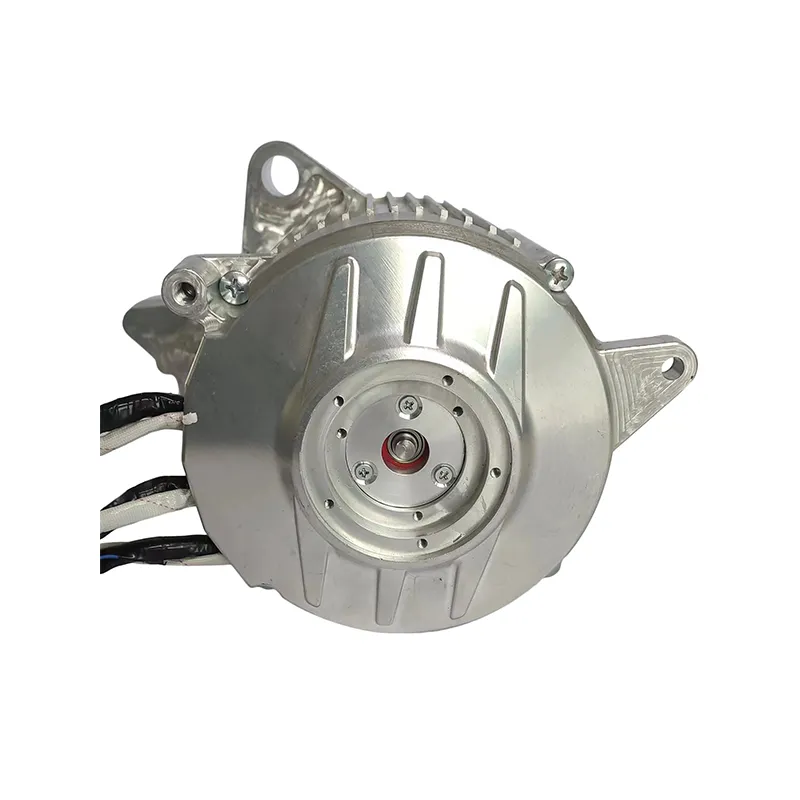
A DC Brushless Motor, also known as an electronically commutated motor, is a synchronous motor using a direct current (DC) electric power supply. DC Brushless Motor are electric motors that utilize electronic commutation to provide their rotational power. Unlike brushed DC motors with brushes that rub against the rotor's commutator to deliver power, DC Brushless Motors use electromagnets instead of brushes. This eliminates common brush wear and friction loss issues, increasing efficiency and reliability. Like a DC Brushed Motor, a DC Brushless Motor works by alternating the polarity of windings inside the motor. DC Brushless Motor is essentially an inside out brushed motor, which eliminates the need for brushes. In a DC Brushless Motor, the permanent magnets are fitted to the rotor, with the electromagnets on the stator. An electronic speed controller (ESC) regulates or ‘commutates’ the charge to the electromagnets in the stator, to enable the rotor to travel through 360-degrees.
Why Choose Us?
Rich Experience
Sunroad Motor has been specializing in the development and production of DC motors for over three decades. As a professional manufacturer of DC motors, it is also an authoritative micro-motor engineering technology center certified by relevant institutions.
Professional Team
The company has established a comprehensive team of 160 professionals dedicated to production, research and development, and management. Equipped with advanced facilities, the team is capable of independently designing and developing products tailored to customer requirements.
Quality Assurance
All our products undergo rigorous quality control processes and have received official certifications, including ISO9001 system certification, CE certification, and UL certification. Additionally, we hold numerous patents that reflect our commitment to innovation and excellence.
Broad Market
Our products are exported to Europe, America, and major cities across China. We maintain long-term, stable partnerships with leading customers in the industry on a global scale, ensuring consistent satisfaction and trust.


Advantages of DC Brushless Motor
Are you considering a DC Brushless Motor for your next project? If so, our specialists are on hand to provide you with all the help and advice you need before investing. A DC Brushless Motor is powered through direct current, meaning the current flows in one direction only. Below are some advantages of DC Brushless Motors that you should consider:
1. Good speed control
DC Brushless Motors offer highly controllable speed. By changing the armature or field voltage it's possible to achieve wide speed variation and with this level of controllability, DC Brushless Motors offer the precision required by a wide range of industry applications.
2. High torque
A DC Brushless Motor also offers a high starting torque, which makes it perfect for use in applications that are designed to move heavier loads, such as wiper systems and in industrial automation applications, such as conveyor systems or materials handling equipment. The consistent drive power that DC Brushless Motors deliver means they’re ideal for maintaining a constant torque whilst an application is in use, making them an excellent choice for a geared motor solution.
3. Seamless operation
As DC Brushless Motors operate with high levels of controllable power across a range of speeds, they offer the benefit of seamless operation. In some industries, it is vital that DC Brushless Motors can start and stop efficiently to cope with the requirements of the application. If you are looking for a solution that offers rapid acceleration, an option to reverse direction and start/stop efficiency, a DC Brushless Motor is a good choice.
4. Free from harmonics
In any electric power system, a harmonic is a voltage or current at a multiple of the fundamental frequency of the system, typically produced by the action of non-linear loads such as rectifiers or saturated magnetic devices. Harmonic frequencies in the power grid can be the cause of power quality problems and harmonics in some AC motors can cause torque pulsations, resulting in a decrease in torque. DC Brushless Motors are free from issues associated with harmonics.
Do DC Brushless Motors Last Longer Than Ac Motors?
• Reliability and Maintenance:
Brushed DC Brushless Motors usually require much more maintenance and have a shorter lifespan than AC motors. This is because the brushes that press against the spinning commutator experience wear and tear, requiring regular maintenance and replacement.
Brushless DC Brushless Motors and AC induction motors, on the other hand, do not have parts that rub against each other, which means that they’re quieter and require less maintenance.
• Efficiency:
AC motors are generally less efficient than DC Brushless Motors for two main reasons. The first is that they use electromagnets in the stator, which consumes electricity, whereas DC Brushless Motors often use permanent magnets instead. Secondly, AC motors experience a phenomenon known as slip, which is the difference between the rotor's speed and the speed of the revolving magnetic field in the stator. Although slip is essential for producing torque, it's directly related to 'copper losses,' which are heat-related power losses incurred when electrical currents pass through the motor's field windings.
DC Brushless Motors also experience some heat losses in their field windings. Brushed versions experience heat loss through resistance in the contact between the commutator and brushes and mechanical losses from this setup.
How to Choose DC Brushless Motor?
When it comes to choosing a DC brushless motor, there are a few key considerations that you should keep in mind, such as:
1. Speed and Torque: One of the most important considerations when choosing a DC brushless motor is its speed and torque capabilities. It is important to select a DC brushless motor with enough power to complete the desired task while not overloading it.
2. Size: Another key factor to consider is the size of the DC brushless motor, which will determine the space requirements of your application. Smaller, lighter DC brushless motors are typically more efficient but may have a different torque or power output than larger DC brushless motors.
3. Cost: As with any purchase, cost is an important factor in selecting a DC brushless motor. When comparing prices, consider factors such as efficiency and durability to determine which DC brushless motor is the best value for your application.
4. Control System: Depending on the application, you may need a specific control system to operate the DC brushless motor. Either analog or digital systems can control DC brushless motors, so make sure to select one that is compatible with your specific needs.
5. Environment: Consider the environment in which your DC brushless motor will be operating. Different DC brushless motors are designed to work in different environmental conditions, so select one that suits your application's environment. This includes factors such as temperature, humidity, and dust levels.

What's the Difference Between Brushed and Brushless Motors?
|
Property |
Brushed motor |
Brushless motor |
|
Torque |
Medium |
High |
|
Weight & Size |
Larger |
Lighter & More Compact |
|
Noise & Vibration Levels |
Noisy (electrical arcing) |
Quiet & Low |
|
Cost |
Lowest |
Medium (added electronics) |
How to Test the Efficiency of a DC Brushless Motor?
To test the DC Brushless Motor efficiency of a brushless DC DC Brushless Motor in a more scientific way, it’s important to first take into account the types of loss that might affect system efficiency. Measuring the loss means you will need to take into account:
Copper loss: Copper loss is caused by the windings in the DC Brushless Motor being resistant to the flow of current. The higher the current, the higher the copper loss. This type of loss is measured by finding the input power required to run the DC Brushless Motor at a specific speed. The faster the speed, the higher the input power required, and the higher the copper loss.
Eddy current loss: Eddy current losses are caused by the rotating magnets in the DC Brushless Motor. These permanent magnets create a magnetic field that induces a current in the stator windings. The current flowing through the stator windings creates a magnetic field of its own, which opposes the original magnetic field. This opposing field causes energy to be lost as heat.
Hysteresis loss: Hysteresis losses are caused by the magnets in the rotor being magnetized and demagnetized as they rotate past the stator windings. This process causes energy to be lost as heat.
Friction loss: Friction losses occur when the friction between the moving parts of the DC Brushless Motor slows it down. These losses are typically very small but can add up over time and cause the DC Brushless Motor to run less efficiently. Brushless DC Brushless Motors are even smaller since brushless DC Brushless Motors don't have brushes that create friction.
Viscous loss: Viscous losses occur when the fluid in the DC Brushless Motor (usually oil) creates resistance to the moving parts of the DC Brushless Motor. These losses are typically very small but can add up over time and cause the DC Brushless Motor to run less efficiently.
Inverter loss: Inverter losses occur in the inverter that’s used to control the DC Brushless Motors. These losses are typically very small but can add up over time and cause the DC Brushless Motor to run less efficiently.
What is the most common point of failure on a DC Brushless Motor?
All electric DC Brushless Motors have their predetermined life span, typically ranging from 30,000 to 40,000 hours.
However, this is dependant on proper maintenance - without which they are likely to break down much quicker.
Understanding the top five causes of DC Brushless Motor failure, as well as the steps that can be taken to reduce the risk of these failures occurring will give your DC Brushless Motor the best chance of achieving its maximum possible service life.
1. Electrical Overload
Electrical overload or over-current is caused by an excessive current flow within the DC Brushless Motor windings, exceeding the design current which the DC Brushless Motor is able to carry efficiently and safely. This can be caused by a low supply voltage, resulting in the DC Brushless Motor drawing in more current in an attempt to maintain its torque. It can also be a result of short circuited conductors, or an excessive voltage supply.
Possible solution: Electrical overload can be prevented by installing effective over-current protection which will detect overcurrent and interrupt supply.
2. Low Resistance
The most common cause of DC Brushless Motor failure, and arguably the most difficult to overcome, is low resistance. Low resistance is caused by the degradation of the insulation of the windings due to conditions such as overheating, corrosion, or physical damage. This leads to insufficient isolation between the conductors or DC Brushless Motor windings, which can cause leakages and short circuits, and eventually DC Brushless Motor failure.
Possible solution: The insulation should be regularly inspected for signs of wear, and replaced before low resistance is able to cause failure.
3. Over-Heating
Around 55% of insulating failures in DC Brushless Motors occur due to overheating. Overheating can be caused by poor power quality, or a high temperature operating environment. For every 10oc that the temperature of a DC Brushless Motor rises, the insulation life reduced by 50%.
Possible solution: It is critical that the DC Brushless Motor is kept as cool as possible, ensuring the operating environment is kept cool if possible will help prevent breakdowns.
4. Contamination
Contamination from dust, dirt and chemicals is one of the leading causes of DC Brushless Motor failure. Foreign bodies which find their way inside the DC Brushless Motor can dent bearing raceways and balls, leading to high levels of vibration and wear. It can also block the cooling fan, limiting the DC Brushless Motor’s ability to regulate its temperature, and increasing the likelihood of overheating.
Possible solution: Preventing contamination is relatively easy. Keep work areas, tools and fixtures as clean as possible to help eliminate the chance of contamination entering the DC Brushless Motor. Also, when laying out the workspace, try to position DC Brushless Motors away from grinding machines which produce large amounts of contaminants.
5. Vibration
Vibration can lead to many issues with the DC Brushless Motor, and can eventually cause the DC Brushless Motor to fail prematurely. Vibration is often caused by the DC Brushless Motor being positioned on an uneven or unstable surface. However, vibration can also be a result of an underlying issue with the DC Brushless Motor, such as loose bearings, misalignment, or corrosion.
How To Improve Performance In Your DC Brushless Motor?
When businesses go through periods of growth, one of the things that rarely changes is their motor set up. Failing to ensure your DC Brushless Motors are still the right ones for the job greatly increases the risk of a fault. To ensure your setup isn't destined to fail, you should carry out a DC Brushless Motor assessment, documenting how many motors you have, their last service or inspection? how old they are, their power ratings, the applications and load requirements? From this, you'll be able to ascertain whether or not your motors are being used correctly, or being subject to higher or lower loads than recommended.
Carbon brushes are an essential component within DC Brushless Motors that are often neglected., Failure to replace carbon brushes at the correct time can result in poor performance, build up of carbon dust, damage to vital components and even complete motor failure. If you notice excessive sparking from brush contact with the DC Brushless Motor's commutator, a decrease in performance from your motor, or a build up of carbon dust – it's time to inspect and potentially replace your carbon brushes. As well as replacing carbon brushes when required, you should ensure that you are using the right kind of brush for your motor. Using the incorrect grade for the application or one that is poorly fitted results in premature wear, sparking, additional heating and ultimately damage to the motor.
Any unusual or excessive noise or vibration is a sign that your DC Brushless Motor is not operating correctly. This can indicate loose parts within the motor or with the mounting arrangement. Prolonged operation with excessive noise and vibration can result in a number of issues including overheating, damaged components, carbon brush sparking, carbon brush damage and winding faults –leading quickly to failure of your DC Brushless Motor and costly remedial work. As well as taking note of any excessive noise and vibration from your motor, consider professional noise and vibration testing to ensure that any abnormal behaviour from your motor doesn't result in a serious issue.
If you are monitoring the performance of your machinery, then you may notice if the normal DC Brushless Motor load current has increased or if it does not operate in the usual way. Whilst this isn't always noticeable, you may be able to identify an increase in energy bills or production costs, which could be an early sign that one of your motors is underperforming.
Essential maintenance is a must for ensuring DC Brushless Motor performance and efficiency remains as expected. Preventative maintenance contracts often come at a fraction of the cost of emergency repair and ensure zero costly downtime for your operation.
Our Factory
Zhejiang Sanrong Electric Motor Co., Ltd. was established in 1986 and has been deeply involved in DC motors for more than 30 years. It is a professional manufacturer of DC motors and an authoritative certified micro motor engineering technology center. In order to meet the needs of customers and the market, the company invested 20 million yuan in 2000 to establish a modern factory in Ningbo with an area of 22000 square meters. We have established a production, research and development, and management team of 160 people. Our mature research and development team and professional testing and research and development equipment enable us to independently design and develop products according to customer needs. Professional automation equipment greatly improves our production capacity to meet the order needs of domestic and foreign customers.


Ultimate FAQ Guide to DC Motor
Q: How to choose a DC Brushless Motor?
• Speed and Torque: One of the most important considerations when choosing a brushless motor is its speed and torque capabilities.
• Size: Another key factor to consider is the size of the motor, which will determine the space requirements of your application.
Q: How do I know what size DC Brushless Motor I need?
Q: How do you size a DC Brushless Motor?
Q: Where is the DC Brushless Motor used?
Q: How do I know which DC Brushless Motor to use?
Q: How do I know which DC Brushless Motor is faster?
Q: What determines the speed of a DC Brushless Motor?
Q: How do I know what size motor I need?
Q: How do I choose a propeller for a DC Brushless Motor?
• Size and weight of your drone.
• Type of application.
• Motor compatibility.
• Flight time.
• Speed.
• Durability.
• Noise.
• Price.
Q: What is the main reason for using a brushless DC motor?
Q: What is the life expectancy of a brushless DC motor?
Q: Can you run a DC Brushless Motor with just a battery?
Q: Do batteries last longer with brushless motors?
Q: Do brushless motors need maintenance?
Q: Do brushless motors lose power over time?
Q: Why do DC Brushless Motor have 3 wires?
Q: What is the most common point of failure on a brushless DC motor?
Q: What are the 3 types of DC Brushless Motors?
Q: How much weight can a 1000kv brushless motor lift?
Q: How can I make my DC Brushless Motor more efficient?
• Use the right motor for the job.
• Check and replace carbon brushes regularly.
• Be aware of any excessive noise or vibration.
• Take note of any underperformance.
• Keep your motor properly maintained.
Zhejiang Sanrong Electric Motor Co., Ltd. is one of the most professional dc brushless motor manufacturers and suppliers in China, providing high quality customized service with reasonable price. We warmly welcome you to buy dc brushless motor for sale here and get quotation from our factory.
dc brushless motor for mining, dc brushless motor for woodworking, large dc brushless motor