

Hey there! As a supplier of winch motor RPM, I've been getting a lot of questions lately about whether the winch motor RPM affects its pulling force. It's a super interesting topic, and I'm stoked to share my thoughts and knowledge on it.
First off, let's quickly understand what winch motor RPM is. RPM stands for revolutions per minute, which basically tells us how many times the motor's shaft rotates in a minute. Now, the pulling force of a winch is the amount of force it can apply to pull an object.
So, does the winch motor RPM affect its pulling force? Well, the short answer is yes, but it's a bit more complicated than that.
In general, there's an inverse relationship between RPM and pulling force in a winch motor. When the RPM of a winch motor goes up, the pulling force tends to go down, and vice versa. This is mainly due to the principles of torque and power. Torque is the rotational force that the motor can generate, and power is the rate at which work is done. According to the formula Power = Torque x RPM (with some constants involved), for a given power output of a motor, if the RPM increases, the torque has to decrease to keep the power constant. And since pulling force is closely related to torque, an increase in RPM usually leads to a decrease in pulling force.
Let's take a practical example. Imagine you're using a winch to pull a heavy vehicle out of a muddy ditch. If you set the winch motor to a high RPM, the motor will spin really fast, but it might not have enough pulling force to move the vehicle. On the other hand, if you reduce the RPM and increase the torque, the winch will be able to generate more pulling force, making it more likely to drag the vehicle out.
However, it's not always a straightforward trade - off. The design of the winch and the motor also play crucial roles. Some high - performance winch motors are engineered to maintain a relatively high pulling force even at higher RPMs. These motors often use advanced technologies and materials to optimize their performance.
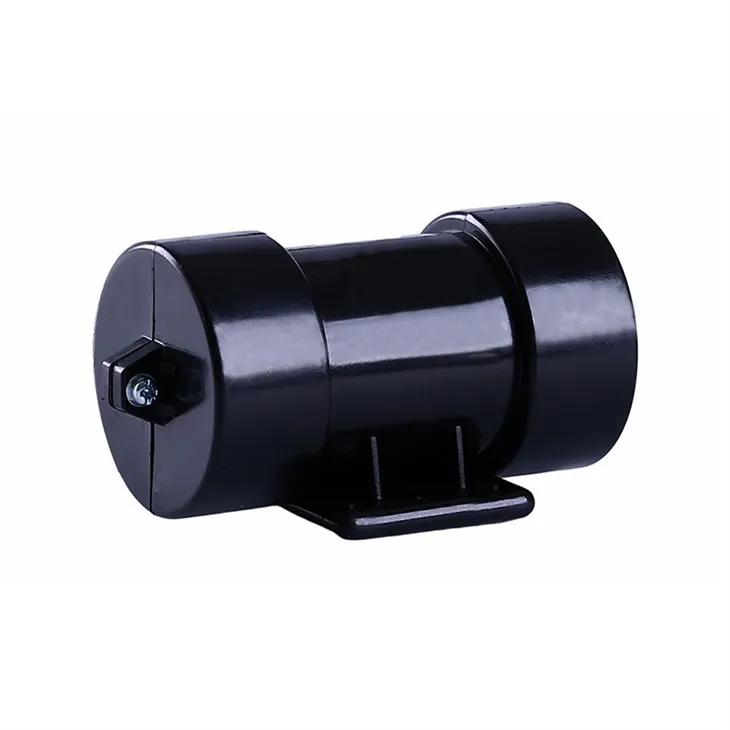

For instance, a winch with a multi - stage gear system can help in adjusting the relationship between RPM and pulling force. The gears can be used to either increase the torque (and thus the pulling force) at the expense of RPM or increase the RPM while sacrificing some pulling force. This gives the user more flexibility depending on the specific task at hand.
Now, let's talk about the applications. Different applications require different balances between RPM and pulling force. In industrial settings where large and heavy loads need to be moved slowly and steadily, a low - RPM, high - pulling - force winch is preferred. For example, in construction sites when lifting heavy building materials or in mining operations for moving large rocks.
On the other hand, in some recreational applications like off - roading, where you might need to quickly recover a stuck vehicle, a winch with a higher RPM might be more useful, even if it sacrifices a bit of pulling force. As long as the vehicle is not extremely heavy, the faster operation can save time and effort.
When it comes to choosing the right winch motor RPM for your needs, it's important to consider the weight of the load you'll be pulling, the speed at which you need to pull it, and the specific environment in which the winch will be used.
If you're in the market for a winch motor, we also offer a range of other related products. Check out our Vibration Dc Motor, which has various applications in different industries. We also have the 24V DC Water Pump Motor for those who need a reliable water - pumping solution, and the 24V Hydraulic DC Motor for hydraulic - related applications.
In conclusion, the winch motor RPM definitely affects its pulling force, but it's a complex relationship that depends on multiple factors. Whether you're looking for a high - RPM winch for quick operations or a low - RPM, high - pulling - force winch for heavy - duty tasks, we've got you covered. If you have any questions or want to discuss your specific requirements, feel free to reach out. We're here to help you find the perfect winch motor for your needs.
If you're interested in starting a purchase or just want to have a chat about winch motors, don't hesitate to get in touch. We're always happy to talk shop and find the best solutions for you.
References:
- Basic principles of motor physics textbooks
- Industry - specific literature on winch design and operation