

As a seasoned supplier of 12V vibration motors, I've encountered numerous inquiries regarding the adjustment of vibration direction. In this blog, I'll delve into the science behind 12V vibration motors and provide practical methods to change their vibration direction.
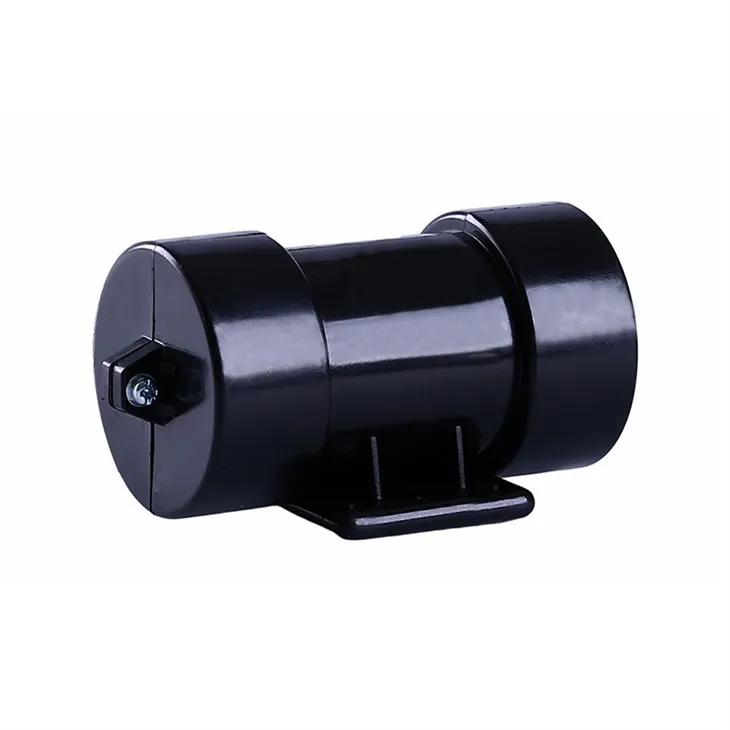
Understanding the Basics of 12V Vibration Motors
Before we explore how to change the vibration direction, it's essential to understand the working principle of a 12V vibration motor. These motors typically operate on the principle of an unbalanced mass attached to a rotating shaft. When the motor is powered by a 12V direct current (DC) source, the shaft rotates, and the unbalanced mass creates an eccentric force, resulting in vibration.
The most common type of 12V vibration motor is the brushed DC motor. These motors are simple in design and widely used due to their low cost and ease of control. The rotation direction of a brushed DC motor can be reversed by changing the polarity of the power supply.

Factors Affecting Vibration Direction
The vibration direction of a 12V vibration motor is primarily determined by the orientation of the unbalanced mass and the rotation direction of the motor shaft. Here are the key factors to consider:
- Unbalanced Mass Orientation: The position of the unbalanced mass relative to the motor shaft significantly affects the vibration direction. If the unbalanced mass is positioned on one side of the shaft, the motor will vibrate in a direction perpendicular to the axis of the shaft.
- Rotation Direction: Reversing the rotation direction of the motor shaft can change the vibration direction. As the unbalanced mass rotates in the opposite direction, the eccentric force generated will also change direction.
Methods to Change the Vibration Direction
Now that we understand the factors affecting vibration direction, let's explore the practical methods to change it.
Method 1: Reversing the Power Supply Polarity
As mentioned earlier, the rotation direction of a brushed DC 12V vibration motor can be reversed by changing the polarity of the power supply. This is the simplest and most common method to change the vibration direction.
To reverse the power supply polarity, follow these steps:
- Disconnect the Motor: Before making any changes, ensure that the motor is disconnected from the power source to avoid electrical shock.
- Identify the Power Terminals: Locate the positive (+) and negative (-) terminals of the motor. These terminals are usually marked on the motor housing.
- Reverse the Connections: Swap the connections of the positive and negative wires connected to the motor terminals. For example, if the red wire was connected to the positive terminal and the black wire was connected to the negative terminal, reverse the connections so that the red wire is connected to the negative terminal and the black wire is connected to the positive terminal.
- Reconnect the Power Source: Once the connections are reversed, reconnect the motor to the 12V power source. The motor should now rotate in the opposite direction, resulting in a change in the vibration direction.
Method 2: Changing the Unbalanced Mass Orientation
Another way to change the vibration direction is by physically changing the orientation of the unbalanced mass. This method is more complex and may require some mechanical modifications.
Here's how you can change the unbalanced mass orientation:
- Disassemble the Motor: Carefully disassemble the motor to access the unbalanced mass. This may require removing screws or other fasteners.
- Rotate the Unbalanced Mass: Once the unbalanced mass is accessible, rotate it to a different position relative to the motor shaft. The exact position will depend on the desired vibration direction.
- Reassemble the Motor: After rotating the unbalanced mass, reassemble the motor. Make sure all the components are properly aligned and tightened.
- Test the Motor: Reconnect the motor to the power source and test the vibration direction. If the desired vibration direction is not achieved, you may need to adjust the unbalanced mass orientation further.
Advanced Techniques for Vibration Direction Control
In some applications, more precise control of the vibration direction is required. Here are some advanced techniques that can be used:
Using a H-Bridge Circuit
A H-bridge circuit is an electronic circuit that allows the polarity of the power supply to be reversed without physically changing the connections. This circuit is commonly used in robotics and motor control applications.
To use a H-bridge circuit to control the vibration direction of a 12V vibration motor, follow these steps:
- Select a Suitable H-Bridge Circuit: There are many H-bridge circuits available in the market. Choose a circuit that is compatible with the voltage and current requirements of your 12V vibration motor.
- Connect the Motor to the H-Bridge Circuit: Connect the motor terminals to the appropriate output pins of the H-bridge circuit.
- Control the H-Bridge Circuit: Use a microcontroller or a control circuit to send signals to the H-bridge circuit to control the polarity of the power supply. By changing the polarity of the power supply, you can reverse the rotation direction of the motor and change the vibration direction.
Using a Stepper Motor
A stepper motor is a type of motor that can be controlled to rotate in precise steps. Unlike a brushed DC motor, a stepper motor can be rotated in either direction by sending the appropriate control signals.
To use a stepper motor to control the vibration direction, follow these steps:
- Select a Suitable Stepper Motor: Choose a stepper motor that is compatible with the voltage and current requirements of your application.
- Connect the Stepper Motor to a Stepper Motor Driver: A stepper motor driver is an electronic circuit that provides the necessary control signals to the stepper motor. Connect the stepper motor to the stepper motor driver according to the manufacturer's instructions.
- Control the Stepper Motor Driver: Use a microcontroller or a control circuit to send signals to the stepper motor driver to control the rotation direction and speed of the stepper motor. By changing the rotation direction of the stepper motor, you can change the vibration direction.
Conclusion
Changing the vibration direction of a 12V vibration motor can be achieved through various methods, depending on the specific requirements of your application. The simplest method is to reverse the power supply polarity, which is suitable for most brushed DC motors. For more precise control, advanced techniques such as using a H-bridge circuit or a stepper motor can be employed.
As a supplier of 12V vibration motors, I offer a wide range of high-quality motors suitable for various applications. If you're interested in purchasing 12V vibration motors or need more information on vibration direction control, please visit our websites Vibration Dc Motor-factory, 12V Hydraulic DC Motor Two Terminals-factory, and 12V Hydraulic DC Motor-factory. We're always ready to assist you with your motor needs and provide expert advice on motor selection and control.
References
- "Electric Motors and Drives: Fundamentals, Types and Applications" by Austin Hughes and Bill Drury.
- "Robotics: Modelling, Planning and Control" by Bruno Siciliano, Lorenzo Sciavicco, Luigi Villani, and Giuseppe Oriolo.