

Accurately controlling the speed of a DC motor for massage is crucial in the massage device industry. As a reliable DC motor for massage supplier, we understand the significance of this aspect and have accumulated rich experience in providing high - quality motors with precise speed control. In this blog, we will explore various methods and considerations for achieving accurate speed control of DC motors used in massage applications.
1. Understanding the Basics of DC Motors for Massage
DC motors are widely used in massage devices due to their simplicity, cost - effectiveness, and controllability. They convert electrical energy into mechanical energy, which is then used to generate the vibrations or movements required for massage. There are different types of DC motors, such as brushed and brushless DC motors. Brushed DC motors are more common in low - cost massage devices, while brushless DC motors offer higher efficiency, longer lifespan, and better speed control, making them suitable for high - end massage products.
The speed of a DC motor is mainly determined by the voltage applied to it and the load on the motor shaft. According to the basic motor speed formula (n=\frac{V - IR}{K\varPhi}), where (n) is the motor speed, (V) is the applied voltage, (I) is the armature current, (R) is the armature resistance, (K) is a constant related to the motor structure, and (\varPhi) is the magnetic flux. By adjusting these parameters, we can control the motor speed.
2. Methods for Controlling the Speed of DC Motors
2.1 Voltage Regulation
One of the simplest and most common methods for controlling the speed of a DC motor is voltage regulation. By changing the voltage applied to the motor, we can directly affect its speed. A lower voltage will result in a lower motor speed, while a higher voltage will increase the speed.
There are several ways to achieve voltage regulation. One is to use a variable power supply. For example, a linear power supply can be adjusted to output different voltages. However, linear power supplies are relatively inefficient as they dissipate a significant amount of power as heat.
Another more efficient option is to use a switching power supply with pulse - width modulation (PWM). PWM works by rapidly switching the power on and off at a high frequency. The average voltage applied to the motor is determined by the duty cycle of the PWM signal. A higher duty cycle means that the power is on for a longer time, resulting in a higher average voltage and a higher motor speed. This method is widely used in modern massage devices because of its high efficiency and precise control.
2.2 Armature Resistance Control
In this method, the resistance in the armature circuit is changed to control the motor speed. By increasing the armature resistance, the current flowing through the armature will decrease, and according to the motor speed formula, the motor speed will also decrease. However, this method has some drawbacks. It is not very efficient because the additional resistance dissipates power as heat. Also, it can only be used to reduce the motor speed below its rated speed.
2.3 Field Flux Control
The speed of a DC motor is inversely proportional to the magnetic flux (\varPhi). By changing the field current, we can adjust the magnetic flux and thus control the motor speed. This method is mainly used for increasing the motor speed above its rated speed. However, it requires a separate field winding and a more complex control circuit.

3. Factors Affecting Speed Control Accuracy
3.1 Load Variation
In massage applications, the load on the motor can vary significantly depending on the pressure applied by the user and the type of massage movement. A sudden increase in load will cause the motor speed to drop if the control system does not respond quickly. To ensure accurate speed control, the control system should be able to detect load changes and adjust the motor input parameters accordingly.
3.2 Motor Characteristics
Different motors have different speed - torque characteristics. Some motors may have a more linear relationship between speed and voltage, while others may have a more complex non - linear relationship. Understanding the specific characteristics of the motor is essential for accurate speed control. For example, a motor with a high armature resistance may be more sensitive to load changes, which requires a more sophisticated control algorithm.
3.3 Environmental Conditions
Environmental factors such as temperature and humidity can also affect the performance of the motor and the accuracy of speed control. High temperatures can increase the resistance of the motor windings, which may lead to a decrease in motor speed. Humidity can cause corrosion of the motor components, affecting its electrical and mechanical properties. Therefore, proper environmental protection measures should be taken in the design of massage devices.
4. Advanced Control Techniques for Accurate Speed Control
4.1 Closed - Loop Control Systems
A closed - loop control system uses feedback to continuously monitor the motor speed and adjust the control input to maintain the desired speed. The most common type of closed - loop control is the proportional - integral - derivative (PID) control.
In a PID controller, the error between the desired speed and the actual speed is calculated. The proportional term provides an immediate response to the error, the integral term accumulates the error over time to eliminate steady - state errors, and the derivative term predicts the future error based on the rate of change of the error. By adjusting the PID parameters, we can achieve very accurate speed control even under varying load conditions.
4.2 Fuzzy Logic Control
Fuzzy logic control is a more intelligent control method that can handle complex and non - linear systems. It uses fuzzy rules based on human experience and knowledge to make control decisions. In the context of DC motor speed control for massage, fuzzy logic control can be used to adapt to different load conditions and user preferences more effectively.
5. Our Products and Solutions
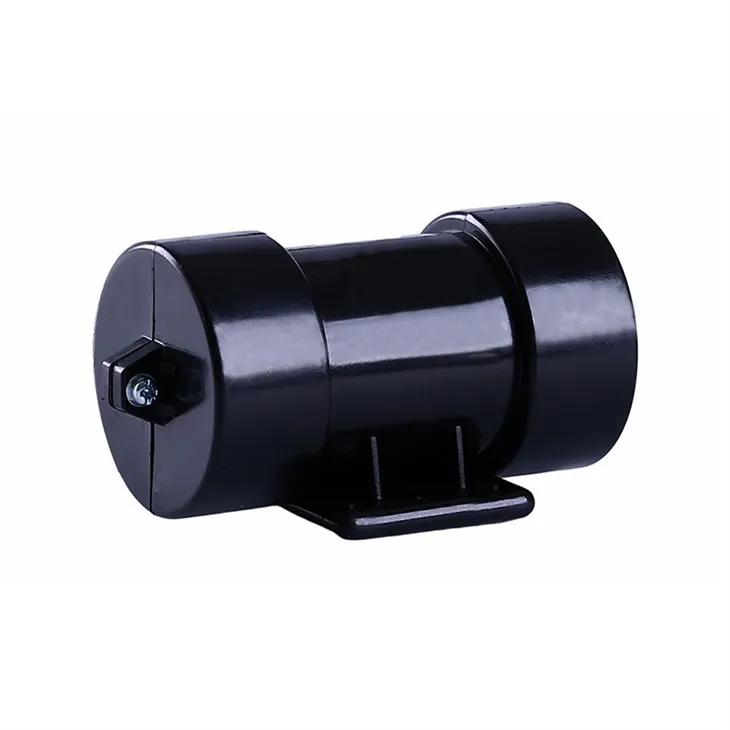
As a DC motor for massage supplier, we offer a wide range of high - quality motors with excellent speed control capabilities. Our Vibration Dc Motor - factory provides motors that are specifically designed for vibration - based massage applications. These motors can be precisely controlled to generate different vibration frequencies and intensities, providing a more personalized massage experience.
We also have 12V Hydraulic DC Motor products, which are suitable for more complex massage mechanisms that require higher power and more accurate speed control. Our 12V Hydraulic DC Motor - factory is committed to producing motors with stable performance and high - precision speed regulation.
We have a professional R & D team that is constantly researching and developing new technologies to improve the speed control accuracy of our motors. We can also provide customized solutions according to the specific requirements of our customers, ensuring that our motors can perfectly meet the needs of different massage devices.
6. Conclusion
Accurately controlling the speed of a DC motor for massage is a multi - faceted challenge that requires a comprehensive understanding of motor principles, control techniques, and the specific requirements of massage applications. By using appropriate control methods, considering various influencing factors, and applying advanced control techniques, we can achieve high - precision speed control.
As a leading DC motor for massage supplier, we are dedicated to providing our customers with the best motor products and solutions. If you are interested in our products or have any questions about DC motor speed control for massage, please feel free to contact us for further discussion and procurement negotiation. We look forward to establishing long - term cooperation with you.
References
- Fitzgerald, A. E., Kingsley, C., & Umans, S. D. (2003). Electric Machinery. McGraw - Hill.
- Dorf, R. C., & Bishop, R. H. (2011). Modern Control Systems. Pearson.
- Krause, P. C., Wasynczuk, O., & Sudhoff, S. D. (2002). Analysis of Electric Machinery and Drive Systems. Wiley - Interscience.