

Hey there! As a PMDC (Permanent Magnet DC) motor supplier, I've seen firsthand how torque ripple can be a real pain in the neck for a lot of our customers. Torque ripple is basically the variation in torque output of a motor as it rotates. It can cause all sorts of issues, like vibration, noise, and reduced efficiency. In this blog, I'm gonna share some tips on how to reduce torque ripple in a PMDC motor.
Understanding Torque Ripple in PMDC Motors
Before we dive into the solutions, let's quickly understand what causes torque ripple in PMDC motors. There are a few main factors:
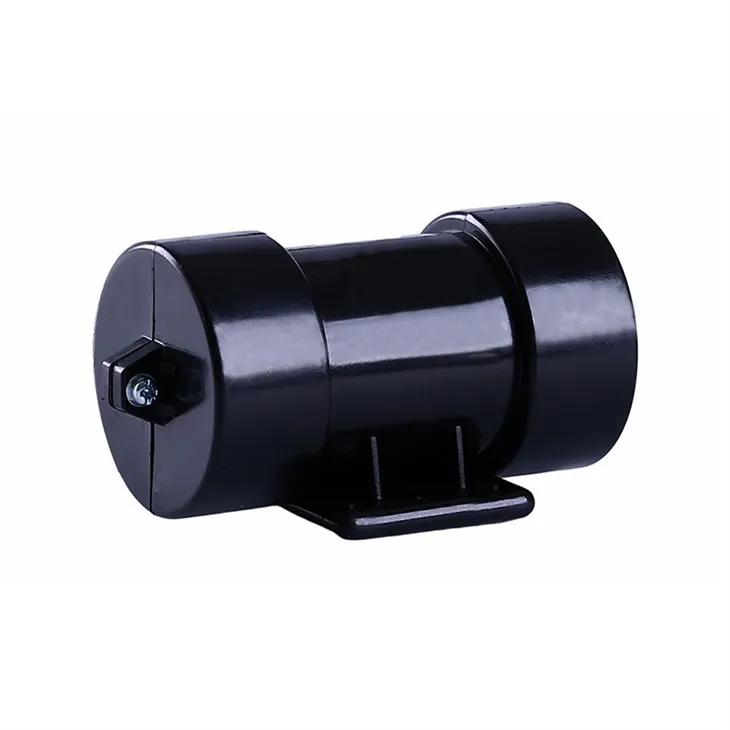

- Slotting Effects: The presence of slots in the stator core can cause changes in the magnetic reluctance as the rotor rotates. This leads to variations in the magnetic field and, consequently, torque ripple.
- Commutation: The process of commutation, where the current in the armature coils is switched, can also introduce torque ripple. When the brushes make and break contact with the commutator segments, there are brief changes in the current flow, which affect the torque output.
- Magnetic Saturation: If the magnetic circuit of the motor becomes saturated, the relationship between the current and the magnetic field becomes non - linear. This can result in uneven torque production.
Design - Related Solutions
Optimize Stator and Rotor Geometry
One of the most effective ways to reduce torque ripple is by optimizing the geometry of the stator and rotor. For example, using skewed slots in the stator can help to smooth out the magnetic field variations. When the slots are skewed, the interaction between the stator and rotor magnetic fields is more uniform as the rotor rotates.
Another option is to use a fractional - slot winding design. Fractional - slot windings can reduce the harmonic content of the magnetic field, which in turn reduces torque ripple. These designs distribute the winding in a way that minimizes the uneven forces acting on the rotor.
High - Quality Magnets
The quality of the permanent magnets in a PMDC motor plays a crucial role in torque ripple reduction. High - quality magnets with a uniform magnetic field can provide a more stable torque output. Neodymium - iron - boron (NdFeB) magnets are often a great choice because they have a high magnetic energy product and good temperature stability. They can help to create a more consistent magnetic field in the motor, reducing the chances of torque fluctuations.
Control - Related Solutions
Current Control
Precise current control is essential for reducing torque ripple. Using a closed - loop current control system, such as a proportional - integral - derivative (PID) controller, can help to maintain a constant current in the motor windings. The PID controller continuously monitors the current and adjusts it as needed to keep it at the desired level. This helps to minimize the variations in torque that are caused by current fluctuations.
Advanced Commutation Techniques
Traditional commutation methods can sometimes lead to significant torque ripple. Advanced commutation techniques, like sensor - less commutation or field - oriented control (FOC), can offer better performance. Sensor - less commutation eliminates the need for external sensors to detect the rotor position, which can simplify the motor design and reduce costs. FOC, on the other hand, allows for independent control of the torque - producing and flux - producing components of the current, resulting in smoother torque output.
Operational Considerations
Load Matching
Matching the motor to the load is really important. If the motor is over - or under - sized for the application, it can lead to increased torque ripple. An over - sized motor may operate at a low load, where the efficiency is poor and the torque ripple is more pronounced. An under - sized motor, on the other hand, may be forced to operate at high currents, which can cause magnetic saturation and increased torque ripple. So, make sure to carefully select the motor based on the load requirements of your application.
Maintenance
Regular maintenance of the PMDC motor can also help to reduce torque ripple. Keeping the brushes and commutator clean and in good condition is crucial. Over time, the brushes can wear down, and the commutator can become dirty or damaged. This can lead to inconsistent current flow and increased torque ripple. By replacing worn - out brushes and cleaning the commutator regularly, you can ensure that the motor operates smoothly.
Real - World Applications and Our Product Range
At our company, we understand the importance of reducing torque ripple in various applications. For example, in Vibration Dc Motor applications, torque ripple can cause excessive vibration, which may not be desirable. By implementing the above - mentioned techniques, we can offer motors with reduced torque ripple, providing a more stable and quiet operation.
In Film Roll Up DC Motor applications, smooth torque output is essential for uniform film winding. Torque ripple can cause uneven winding, leading to quality issues. Our optimized motor designs can ensure a consistent torque, resulting in better - quality film rolls.
For DC Gear Motor applications, torque ripple can cause noise and premature wear of the gears. By reducing torque ripple, we can extend the lifespan of the gearbox and improve the overall performance of the motor - gear system.
Conclusion
Reducing torque ripple in a PMDC motor is a multi - faceted challenge that requires a combination of design, control, and operational solutions. By optimizing the stator and rotor geometry, using high - quality magnets, implementing advanced control techniques, and ensuring proper maintenance, we can significantly reduce torque ripple.
If you're in the market for PMDC motors with low torque ripple for your specific application, don't hesitate to reach out. We're here to help you find the best motor solution that meets your needs. Whether it's for a vibration application, film roll - up, or a gear - driven system, we've got the expertise and the products to make your project a success. Contact us today to start a discussion about your requirements and let's work together to get the most out of your motor.
References
- Krause, P. C., Wasynczuk, O., & Sudhoff, S. D. (2002). Analysis of Electric Machinery and Drive Systems. Wiley - Interscience.
- Chapman, S. J. (2012). Electric Machinery Fundamentals. McGraw - Hill Education.