

As a supplier of Vibration DC Motors, I've had the privilege of working closely with these remarkable devices. They are widely used in various applications, from mobile phones to industrial equipment, thanks to their ability to generate vibrations efficiently. However, like any technology, Vibration DC Motors come with their own set of disadvantages. In this blog post, I'll delve into some of the key drawbacks associated with these motors, providing you with a comprehensive understanding to make informed decisions when considering their use.
1. Limited Lifespan
One of the most significant disadvantages of Vibration DC Motors is their relatively limited lifespan. These motors typically rely on brushes and commutators to transfer electrical power to the rotating armature. Over time, the brushes wear down due to friction and arcing, leading to a decrease in performance and eventually motor failure. The lifespan of a Vibration DC Motor can vary depending on factors such as operating conditions, load, and quality of components, but it is generally shorter compared to some other types of motors.
For example, in a high - vibration environment or when operating at high speeds for extended periods, the wear on the brushes can be accelerated. This not only requires more frequent maintenance and replacement of parts but also increases the overall cost of ownership. As a supplier, I often advise my customers to consider the expected usage and operating conditions carefully when selecting a Vibration DC Motor to minimize the impact of this limited lifespan.
2. Noise and Vibration Pollution
While the primary function of a Vibration DC Motor is to generate vibrations, this very characteristic can also be a disadvantage in certain applications. The vibrations produced by these motors can cause unwanted noise, which can be a nuisance in quiet environments such as offices, hospitals, or residential areas. The noise is often a result of the mechanical movement of the motor components, as well as the interaction between the motor and its mounting structure.
In addition to noise, excessive vibrations can also have a negative impact on the surrounding equipment and structures. For instance, in precision manufacturing processes, the vibrations from a Vibration DC Motor can affect the accuracy of the machinery, leading to quality issues in the products being produced. To mitigate these problems, additional measures such as vibration isolation mounts and noise - dampening materials may be required, which add to the complexity and cost of the system.
3. Electrical Interference
Vibration DC Motors can generate electrical interference, also known as electromagnetic interference (EMI). This interference is caused by the arcing that occurs between the brushes and the commutator during the operation of the motor. The EMI can radiate from the motor and interfere with other electronic devices in the vicinity, such as radios, televisions, and sensitive control systems.
In some cases, the electrical interference can disrupt the normal operation of these devices, leading to malfunctions or inaccurate readings. To comply with electromagnetic compatibility (EMC) standards, additional EMI filtering components may need to be added to the motor or the system in which it is installed. This not only increases the cost but also adds to the size and complexity of the overall design.
4. Efficiency Issues
Compared to some other types of motors, Vibration DC Motors may have lower efficiency. The energy losses in these motors are mainly due to the resistance in the windings, the friction between the brushes and the commutator, and the mechanical losses associated with the vibration mechanism. These losses result in the conversion of electrical energy into heat, which not only reduces the overall efficiency of the motor but also requires additional cooling measures in some applications.
For example, in battery - powered devices, the lower efficiency of a Vibration DC Motor can lead to shorter battery life, which is a significant disadvantage. As a supplier, I work with my customers to optimize the motor selection and system design to improve efficiency and reduce energy consumption.
5. Speed Control Limitations
Vibration DC Motors often have limitations when it comes to speed control. The speed of these motors is typically controlled by varying the voltage applied to the motor. However, this method of speed control can be less precise compared to other types of motors, such as brushless DC motors.

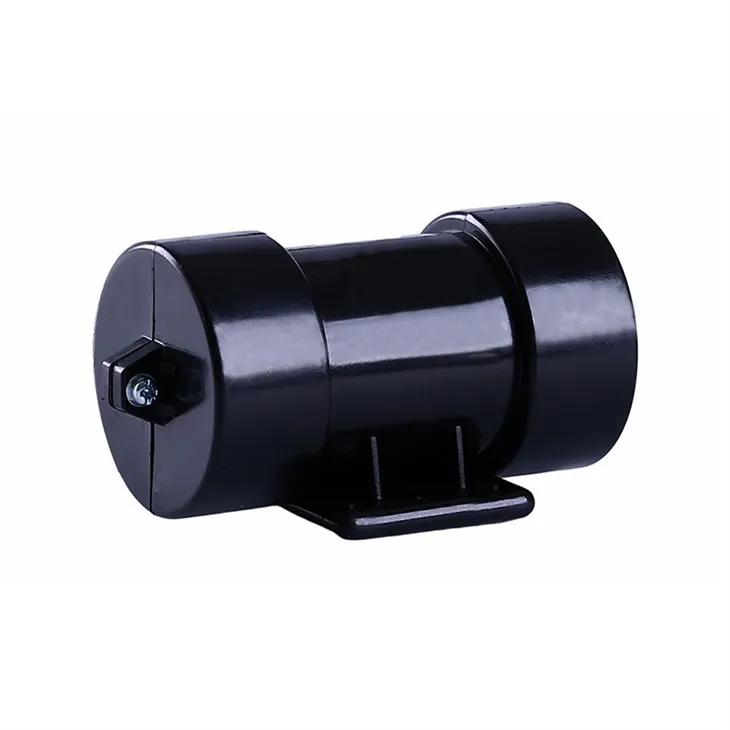
In applications where precise speed control is required, such as in robotics or automation systems, the limitations of Vibration DC Motors can be a significant drawback. The speed of the motor may also be affected by factors such as load variations and changes in the power supply voltage, which can make it challenging to maintain a constant speed.
6. Environmental Sensitivity
Vibration DC Motors can be sensitive to environmental conditions. For example, they may not perform well in high - humidity or dusty environments. The moisture can cause corrosion of the motor components, especially the brushes and the commutator, while dust can accumulate on the motor windings and reduce the cooling efficiency.
In addition, extreme temperatures can also affect the performance of these motors. At high temperatures, the resistance of the motor windings increases, which can lead to a decrease in efficiency and an increase in heat generation. At low temperatures, the lubricants used in the motor may thicken, increasing the friction and reducing the motor's speed and torque.
Despite these disadvantages, Vibration DC Motors still have many advantages, such as their simplicity, low cost, and high torque at low speeds. They are suitable for a wide range of applications where the disadvantages can be managed or are not critical. As a supplier, I am committed to providing my customers with high - quality Vibration DC Motors and offering technical support to help them overcome these challenges.
If you are interested in learning more about our Vibration Dc Motor products or have any questions regarding their application, please feel free to contact me for a detailed discussion. We can also explore other options such as PMDC Motor or 12V Hydraulic DC Motor Two Terminals - factory that may better suit your specific needs. Let's work together to find the best motor solution for your project.
References
- "Electric Motors and Drives: Fundamentals, Types and Applications" by Austin Hughes and Bill Drury.
- "Electromagnetic Compatibility Engineering" by Henry W. Ott.
- Technical documentation from various motor manufacturers.