

Hey there! As a supplier of 12V DC hydraulic motors, I often get asked about the differences between 12V DC hydraulic motors and AC hydraulic motors. So, I thought I'd write this blog to break it down for you in a simple and easy - to - understand way.
Let's start with the basics. A hydraulic motor is a device that converts hydraulic pressure and flow into mechanical torque and rotation. It's used in a wide range of applications, from industrial machinery to mobile equipment.
Power Source
The most obvious difference between a 12V DC hydraulic motor and an AC hydraulic motor is the power source. A 12V DC hydraulic motor runs on direct current (DC) at a voltage of 12 volts. This is a relatively low - voltage power source, which makes it suitable for applications where safety is a concern or where a low - power operation is required. For example, small mobile equipment like lawn mowers or small winches can benefit from a 12V DC hydraulic motor. You can check out our 12V Hydraulic DC Motor for more details on this type of motor.
On the other hand, an AC hydraulic motor runs on alternating current (AC). AC power is the type of power that comes from your wall sockets at home or in an industrial setting. It typically has a higher voltage, such as 110V or 220V in residential areas and even higher in industrial applications. This higher voltage allows AC hydraulic motors to deliver more power, making them suitable for large - scale industrial machinery like heavy - duty presses or large conveyor systems.
Efficiency and Performance
When it comes to efficiency, both types of motors have their pros and cons. 12V DC hydraulic motors are generally more efficient at low - speed operations. They can provide a high starting torque, which means they can start moving heavy loads easily. This is because DC motors have a simple design that allows for a direct conversion of electrical energy into mechanical energy. Also, the low - voltage operation reduces power losses due to heat, especially in small - scale applications.
AC hydraulic motors, however, are more efficient at high - speed operations. They can maintain a consistent speed over a wide range of loads, which is crucial for applications where a constant speed is required. The design of AC motors, with their rotating magnetic fields, allows for a smooth and continuous operation. But at low speeds, AC motors may experience some inefficiencies due to the need to adjust the frequency of the alternating current.
Cost and Maintenance
Cost is another important factor to consider. 12V DC hydraulic motors are usually less expensive than AC hydraulic motors. The lower voltage components and simpler design contribute to the lower cost. This makes them a more budget - friendly option for small businesses or DIY projects.
In terms of maintenance, 12V DC hydraulic motors are generally easier to maintain. They have fewer moving parts compared to AC motors, which means there are fewer things that can go wrong. Also, the low - voltage operation reduces the risk of electrical hazards during maintenance. AC hydraulic motors, on the other hand, may require more complex maintenance procedures due to their higher - voltage components and more intricate design.
Application Flexibility
12V DC hydraulic motors offer great application flexibility. They can be easily powered by batteries, which makes them ideal for mobile and portable equipment. For example, if you're building a small hydraulic winch for a boat or a camping trailer, a 12V DC hydraulic motor can be powered by the vehicle's battery. You can also find our 24V DC Winch Motor which is also suitable for winch applications with a slightly higher power requirement.
AC hydraulic motors are more commonly used in fixed - location industrial applications. Since they rely on the AC power grid, they are not as easily portable as DC motors. However, they are the go - to choice for large - scale industrial processes where a continuous and high - power supply is available.
Control and Speed Regulation
Controlling the speed of a 12V DC hydraulic motor is relatively straightforward. You can use a simple variable resistor or a more advanced electronic speed controller to adjust the speed. This makes it easy to fine - tune the motor's performance according to the specific requirements of the application.
AC hydraulic motors, on the other hand, require more complex control systems to regulate speed. Variable frequency drives (VFDs) are commonly used to adjust the frequency of the AC power supply, which in turn controls the motor's speed. While this allows for precise speed control, it also adds to the cost and complexity of the system.
Noise and Vibration
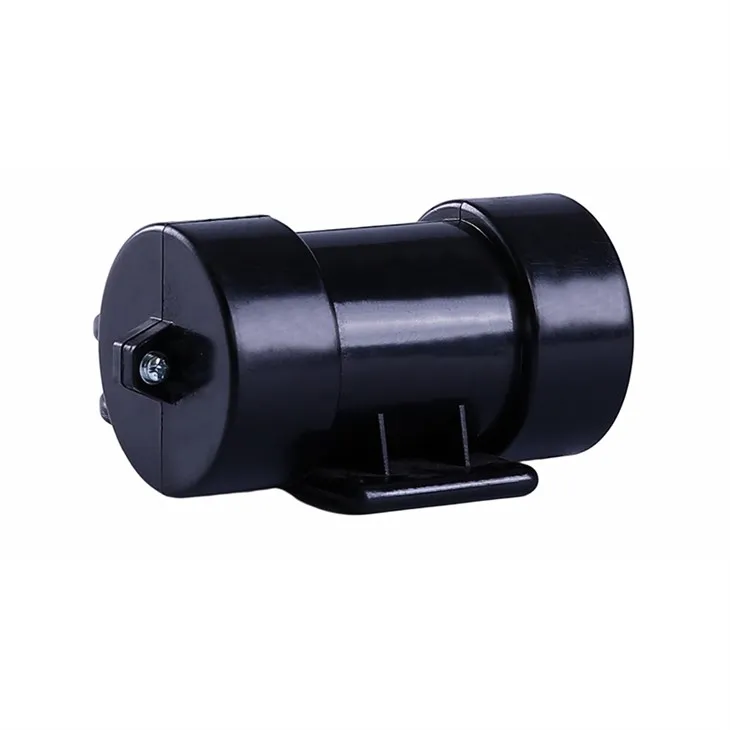
12V DC hydraulic motors tend to produce less noise and vibration compared to AC hydraulic motors. The low - voltage operation and simpler design result in a smoother operation. If you're working in an environment where noise is a concern, such as a residential area or a noise - sensitive industrial setting, a 12V DC hydraulic motor might be a better choice. You can also explore our Vibration Dc Motor if you need a motor with specific vibration characteristics.
AC hydraulic motors, especially those operating at high speeds, can generate more noise and vibration. This is due to the rotating magnetic fields and the higher - power operation. However, with proper insulation and mounting, the noise and vibration can be reduced to an acceptable level.
Conclusion
In conclusion, the choice between a 12V DC hydraulic motor and an AC hydraulic motor depends on your specific application requirements. If you need a low - cost, portable, and easy - to - maintain motor for small - scale or low - speed applications, a 12V DC hydraulic motor is a great option. On the other hand, if you require a high - power, high - speed motor for large - scale industrial applications, an AC hydraulic motor is the way to go.
If you're still not sure which type of motor is right for you, or if you have any questions about our 12V DC hydraulic motors, feel free to reach out. We're here to help you make the best choice for your project. Whether you're a small business owner, a DIY enthusiast, or an industrial engineer, we can provide you with the right motor and support. Let's start a conversation and see how we can work together to meet your hydraulic motor needs.
References
- Hydraulic Motor Handbook, Various Authors
- Electrical Engineering for Non - Engineers, Third Edition by Ronald Billings