

As a seasoned DC Brushed Motor supplier, I've witnessed firsthand the pivotal role these motors play across diverse industries. One of the most crucial aspects in understanding and optimizing the performance of a DC brushed motor is its efficiency curve. This curve provides invaluable insights into how efficiently the motor converts electrical energy into mechanical energy under various operating conditions.
Understanding the Basics of DC Brushed Motors
Before delving into the efficiency curve, let's briefly review what a DC brushed motor is. At its core, a DC brushed motor consists of a stator, which houses the permanent magnets, and a rotor, which has coils of wire. The brushes, typically made of carbon, provide electrical contact with the commutator on the rotor, reversing the direction of the current in the rotor coils as it rotates. This interaction between the magnetic fields of the stator and the rotor generates the torque necessary to drive the motor.
The Concept of Efficiency in DC Brushed Motors
Efficiency in a DC brushed motor is defined as the ratio of the mechanical power output to the electrical power input. Mathematically, it can be expressed as:
[
\eta = \frac{P_{out}}{P_{in}} \times 100%
]
Where $\eta$ is the efficiency, $P_{out}$ is the mechanical power output, and $P_{in}$ is the electrical power input. The mechanical power output is the product of the torque ($\tau$) and the angular velocity ($\omega$):
[
P_{out} = \tau \cdot \omega
]
The electrical power input is the product of the voltage ($V$) and the current ($I$):
[
P_{in} = V \cdot I
]
Efficiency is a critical parameter as it directly impacts the operating cost and lifespan of the motor. A more efficient motor consumes less electrical energy for the same amount of mechanical work, resulting in lower energy bills and reduced heat generation, which can extend the motor's lifespan.
Factors Affecting the Efficiency Curve of a DC Brushed Motor
The efficiency curve of a DC brushed motor is typically a non-linear relationship between efficiency and some operating parameter, such as load torque or speed. Several factors influence the shape of this curve:
1. Copper Losses
Copper losses occur due to the resistance of the rotor windings. As current flows through the windings, some of the electrical energy is dissipated as heat according to Joule's law ($P = I^{2}R$). At low loads, the current is relatively low, resulting in minimal copper losses. As the load increases, the current drawn by the motor also increases, leading to higher copper losses. This causes the efficiency to initially increase with load until a certain point, after which the increase in copper losses outweighs the increase in mechanical power output, causing the efficiency to decline.
2. Iron Losses
Iron losses consist of hysteresis and eddy current losses in the stator and rotor cores. Hysteresis losses occur due to the repeated magnetization and demagnetization of the magnetic material, while eddy current losses are caused by the induced currents in the conductive cores. These losses are present even at no load and increase with speed. At low speeds, iron losses are relatively small, but as the motor speed increases, iron losses become more significant, affecting the overall efficiency.
3. Brush and Commutator Losses
The brushes and commutator in a DC brushed motor introduce additional losses. The friction between the brushes and the commutator, as well as the electrical resistance at the brush-commutator interface, result in power dissipation as heat. These losses are relatively constant across different loads but can have a significant impact on efficiency, especially at low loads.
4. Mechanical Losses
Mechanical losses include friction in the bearings and windage losses due to air resistance. These losses are relatively constant and increase slightly with speed. At low speeds, mechanical losses are a significant portion of the total losses, but as the load and speed increase, their impact on efficiency becomes relatively smaller.
Analyzing the Efficiency Curve
The efficiency curve of a DC brushed motor typically has a characteristic shape. At no load, the efficiency is very low because the motor is still consuming electrical power to overcome iron, brush, and mechanical losses, but there is no useful mechanical power output. As the load increases, the efficiency initially increases rapidly as the mechanical power output increases while the losses do not increase proportionally.
The peak efficiency occurs at a specific load point. At this point, the balance between the power output and the various losses is optimized. Beyond the peak efficiency point, the efficiency starts to decline as the increase in copper losses and other losses becomes more significant compared to the increase in mechanical power output.
The shape and position of the efficiency curve can vary depending on the design and construction of the motor. For example, a motor with a larger rotor diameter and fewer turns of wire may have a different efficiency curve compared to a motor with a smaller rotor diameter and more turns of wire.

Practical Implications for Applications
Understanding the efficiency curve of a DC brushed motor is crucial for selecting the right motor for a specific application. For applications where the motor operates at a relatively constant load, it is important to choose a motor whose peak efficiency occurs at or near this load. This ensures that the motor operates as efficiently as possible, minimizing energy consumption and operating costs.
For applications where the load varies significantly, such as in a servo system or a robotics application, it may be necessary to consider a motor with a broader peak efficiency range. Additionally, the efficiency curve can be used to predict the performance and energy consumption of the motor under different operating conditions, allowing for more accurate system design and optimization.
Our Product Range
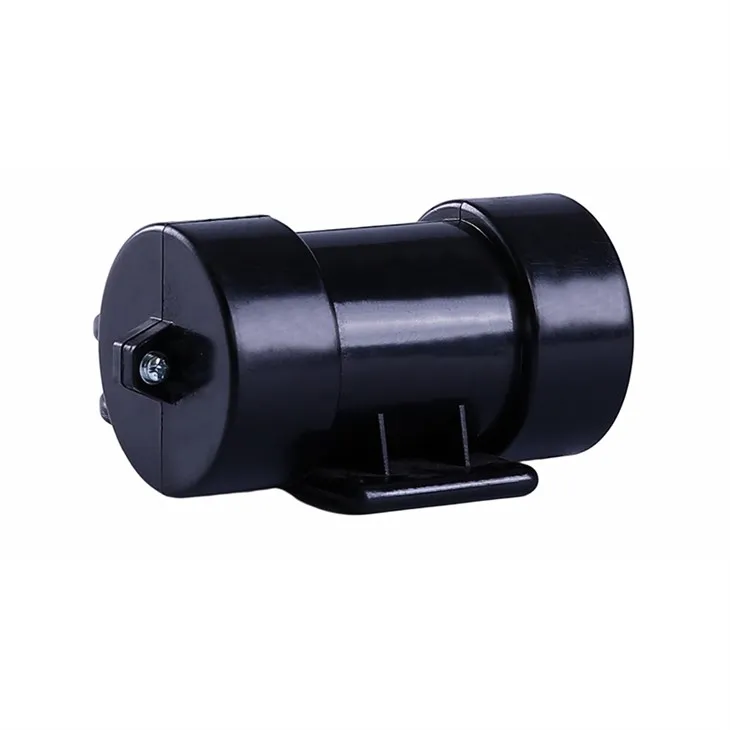
As a DC Brushed Motor supplier, we offer a wide range of motors to meet the diverse needs of our customers. Our Vibration Dc Motor is ideal for applications such as mobile phones, massagers, and gaming controllers, where vibration is required. The 24V Hydraulic DC Motor is designed for hydraulic systems, providing high torque and reliable performance. And our 12V DC Winch Motor is suitable for winches and other lifting applications.
Conclusion
The efficiency curve of a DC brushed motor is a critical tool for understanding its performance and optimizing its operation. By considering the factors that affect the efficiency curve and analyzing its shape, engineers and designers can select the right motor for their applications, ensuring maximum energy efficiency and reliability.
If you have any questions or need help selecting the right DC brushed motor for your application, we invite you to contact us for a detailed consultation. Our team of experts is ready to help you find the best solution for your specific needs.
References
- Fitzgerald, A. E., Kingsley, C., & Umans, S. D. (2003). Electric Machinery, 6th Edition. McGraw-Hill.
- Chapman, S. J. (2005). Electric Machinery Fundamentals, 4th Edition. McGraw-Hill.