

In the world of electric motors, Permanent Magnet DC (PMDC) motors stand out for their simplicity, efficiency, and reliability. As a leading supplier of PMDC motors, I've had the privilege of working closely with these remarkable devices, witnessing their widespread applications in various industries. One of the fundamental concepts that underpin the operation of PMDC motors is the field flux. In this blog post, I'll delve into the intricacies of field flux in PMDC motors, exploring its significance, how it's generated, and its impact on motor performance.
Understanding the Basics of a PMDC Motor
Before we dive into the concept of field flux, let's take a moment to understand the basic structure and operation of a PMDC motor. A PMDC motor consists of two main parts: the stator and the rotor. The stator is the stationary part of the motor, which houses the permanent magnets. These magnets create a fixed magnetic field. The rotor, on the other hand, is the rotating part of the motor and contains the armature winding. When an electric current is passed through the armature winding, a magnetic field is generated around it. The interaction between the magnetic field of the permanent magnets (field flux) and the magnetic field of the armature winding produces a torque, which causes the rotor to rotate.
What is Field Flux?
Field flux, often denoted as Φ, is a measure of the total magnetic field passing through a given area. In the context of a PMDC motor, the field flux refers to the magnetic field produced by the permanent magnets in the stator. It is a crucial parameter that determines the motor's performance characteristics, such as torque, speed, and efficiency.
The field flux is a vector quantity, which means it has both magnitude and direction. The magnitude of the field flux depends on several factors, including the strength of the permanent magnets, the shape and size of the magnets, and the air gap between the stator and the rotor. The direction of the field flux is determined by the orientation of the permanent magnets.
Generation of Field Flux in a PMDC Motor
In a PMDC motor, the field flux is generated by the permanent magnets in the stator. Permanent magnets are made of materials that have a high magnetic coercivity, which means they can retain their magnetism even in the absence of an external magnetic field. Common materials used for permanent magnets in PMDC motors include neodymium iron boron (NdFeB), samarium cobalt (SmCo), and ferrite.
When the permanent magnets are installed in the stator, they create a magnetic field around them. The magnetic field lines emerge from the north pole of the magnet and enter the south pole, forming a closed loop. The field flux is the total number of magnetic field lines passing through a given area perpendicular to the direction of the magnetic field.
Importance of Field Flux in PMDC Motor Performance
The field flux plays a crucial role in determining the performance of a PMDC motor. Here are some of the key ways in which field flux affects motor performance:
Torque Production
The torque produced by a PMDC motor is directly proportional to the field flux and the armature current. Mathematically, the torque equation for a PMDC motor can be expressed as:
T = k * Φ * Ia
where T is the torque, k is a constant, Φ is the field flux, and Ia is the armature current. From this equation, it's clear that increasing the field flux will result in an increase in the torque produced by the motor. This is why high-strength permanent magnets are often used in PMDC motors to maximize the field flux and, consequently, the torque output.
Speed Regulation
The speed of a PMDC motor is inversely proportional to the field flux. As the field flux increases, the speed of the motor decreases, and vice versa. This relationship is described by the speed equation for a PMDC motor:
N = (V - Ia * Ra) / (k * Φ)
where N is the speed, V is the applied voltage, Ra is the armature resistance, k is a constant, and Φ is the field flux. By controlling the field flux, it's possible to regulate the speed of the motor. For example, in some applications, a variable field flux can be used to achieve a wide range of speed control.
Efficiency
The efficiency of a PMDC motor is also affected by the field flux. A higher field flux allows the motor to produce more torque with less armature current, which reduces the copper losses in the armature winding. Additionally, a stronger field flux can help to reduce the magnetic losses in the motor. As a result, motors with a higher field flux tend to be more efficient.
Factors Affecting Field Flux in a PMDC Motor
Several factors can affect the field flux in a PMDC motor. Understanding these factors is essential for optimizing motor performance. Here are some of the key factors:
Magnet Material and Quality
The type and quality of the permanent magnets used in the motor have a significant impact on the field flux. High-strength magnets, such as NdFeB, can produce a stronger field flux compared to lower-strength magnets, such as ferrite. Additionally, the quality of the magnets, including their magnetic properties and manufacturing tolerances, can affect the consistency and stability of the field flux.
Magnet Shape and Size
The shape and size of the permanent magnets also play a role in determining the field flux. Magnets with a larger surface area and a more optimized shape can produce a stronger and more uniform field flux. For example, some motors use specially designed magnets with a curved shape to improve the distribution of the magnetic field.
Air Gap
The air gap between the stator and the rotor is another important factor. A smaller air gap allows the magnetic field lines to pass through more easily, resulting in a stronger field flux. However, reducing the air gap too much can increase the risk of mechanical interference between the stator and the rotor. Therefore, the air gap needs to be carefully designed to balance the need for a strong field flux with the mechanical requirements of the motor.
Applications of PMDC Motors and the Role of Field Flux
PMDC motors are widely used in a variety of applications, ranging from consumer electronics to industrial machinery. The field flux plays a critical role in ensuring the proper operation of these applications. Here are some examples:

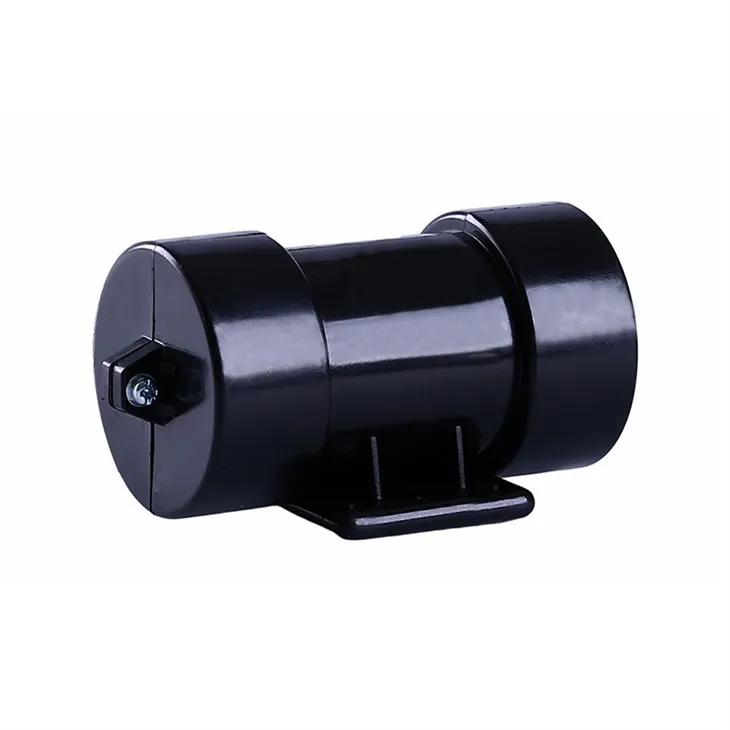
Automotive Applications
In automotive applications, PMDC motors are used in various systems, such as power windows, windshield wipers, and cooling fans. The field flux in these motors is carefully optimized to provide the required torque and speed for smooth and reliable operation. For example, a power window motor needs to be able to generate enough torque to lift the window quickly and smoothly, while a cooling fan motor needs to operate at a high speed to provide adequate airflow.
Robotics
Robots rely on PMDC motors for precise movement control. The field flux in these motors is adjusted to achieve the desired torque and speed characteristics for different types of robotic movements. For example, a robotic arm may require a motor with a high torque output for lifting heavy objects, while a motor in a robotic joint may need to provide smooth and precise movement for accurate positioning.
Medical Devices
PMDC motors are also used in medical devices, such as infusion pumps and ventilators. In these applications, the field flux is carefully controlled to ensure the accuracy and reliability of the device. For example, an infusion pump needs to deliver a precise amount of medication at a constant rate, which requires a motor with a stable and well-controlled field flux.
Conclusion
In conclusion, the field flux is a fundamental concept in the operation of a PMDC motor. It is the magnetic field produced by the permanent magnets in the stator and plays a crucial role in determining the motor's performance characteristics, such as torque, speed, and efficiency. Understanding the factors that affect field flux and how it impacts motor performance is essential for optimizing the design and operation of PMDC motors.
As a supplier of PMDC motors, we offer a wide range of high-quality motors for various applications. Our motors are designed with carefully selected permanent magnets to ensure a strong and stable field flux, resulting in reliable and efficient performance. If you're interested in our products, such as the 12V DC Water Pump Motor, Vibration Dc Motor-factory, or 12V Hydraulic DC Motor Two Terminals-factory, please don't hesitate to contact us for more information and to discuss your specific requirements. We look forward to working with you to find the perfect motor solution for your application.
References
- Chapman, S. J. (2012). Electric Machinery Fundamentals. McGraw-Hill Education.
- Fitzgerald, A. E., Kingsley, C., & Umans, S. D. (2003). Electric Machinery. McGraw-Hill Education.