

Hey there! As a supplier of 24V linear actuators, I often get asked about the force output of these nifty devices. So, I thought I'd take a moment to break it down for you and give you a better understanding of what to expect from a typical 24V linear actuator.
First off, let's talk about what a linear actuator is. In simple terms, it's a device that converts rotational motion into linear motion. Think of it like a mechanical muscle that can push or pull objects in a straight line. These actuators are used in a wide range of applications, from industrial machinery to home automation systems.
Now, when it comes to the force output of a 24V linear actuator, there are a few factors that come into play. The most important one is the design and construction of the actuator itself. Different models are built to handle different levels of force, so it's crucial to choose the right one for your specific needs.
One of the key components that determines the force output is the motor. A 24V linear actuator typically uses a DC motor, which provides the power to drive the actuator. The size and power rating of the motor can vary significantly, and this directly impacts the amount of force the actuator can generate. Generally speaking, a larger and more powerful motor will be able to produce more force.
Another factor is the gearbox. The gearbox is responsible for reducing the speed of the motor and increasing the torque, which in turn increases the force output. There are different types of gearboxes available, such as worm gear, planetary gear, and spur gear. Each type has its own advantages and disadvantages in terms of efficiency, durability, and force transmission.
The lead screw or belt drive system also plays a role in determining the force output. The lead screw is a threaded rod that converts the rotational motion of the motor into linear motion. The pitch of the lead screw (the distance between each thread) affects the speed and force of the actuator. A finer pitch will result in slower movement but higher force, while a coarser pitch will provide faster movement but lower force.
So, what can you expect in terms of force output from a typical 24V linear actuator? Well, it can vary widely depending on the specific model and its intended application. On the lower end, you might find actuators that can generate a few pounds of force, which are suitable for light-duty tasks such as opening and closing small doors or adjusting the position of a small object.
For medium-duty applications, you can expect force outputs in the range of 50 to 500 pounds. These actuators are commonly used in things like adjustable desks, hospital beds, and automotive seat adjusters. They provide enough force to move moderately heavy objects with precision.
On the heavy-duty side, there are 24V linear actuators that can generate forces of over 1000 pounds. These are typically used in industrial settings, such as manufacturing equipment, construction machinery, and aerospace applications. They are designed to handle large loads and provide reliable performance under demanding conditions.
It's important to note that the force output specified by the manufacturer is usually the maximum force the actuator can generate under ideal conditions. In real-world applications, the actual force output may be lower due to factors such as friction, load inertia, and the angle of the load. So, it's always a good idea to choose an actuator with a slightly higher force rating than you think you'll need to ensure reliable operation.
Now, let's talk about some of the other features and considerations when it comes to 24V linear actuators. One important aspect is the stroke length, which refers to the maximum distance the actuator can move. This can range from just a few inches to several feet, depending on the model. Make sure to choose an actuator with a stroke length that meets your specific requirements.
Another feature to look for is the speed of the actuator. The speed is usually measured in inches per second or millimeters per second. Different applications may require different speeds, so it's important to choose an actuator that can operate at the desired speed.
In addition to the force output, stroke length, and speed, you may also want to consider other features such as position feedback, overload protection, and IP rating (which indicates the level of protection against dust and water). These features can enhance the functionality and reliability of the actuator in your application.
As a supplier of 24V linear actuators, I offer a wide range of models to suit different needs and budgets. Whether you're looking for a light-duty actuator for a home project or a heavy-duty actuator for an industrial application, I've got you covered. And if you're not sure which actuator is right for you, I'm always here to help. Just give me a call or send me an email, and I'll be happy to provide you with expert advice and guidance.
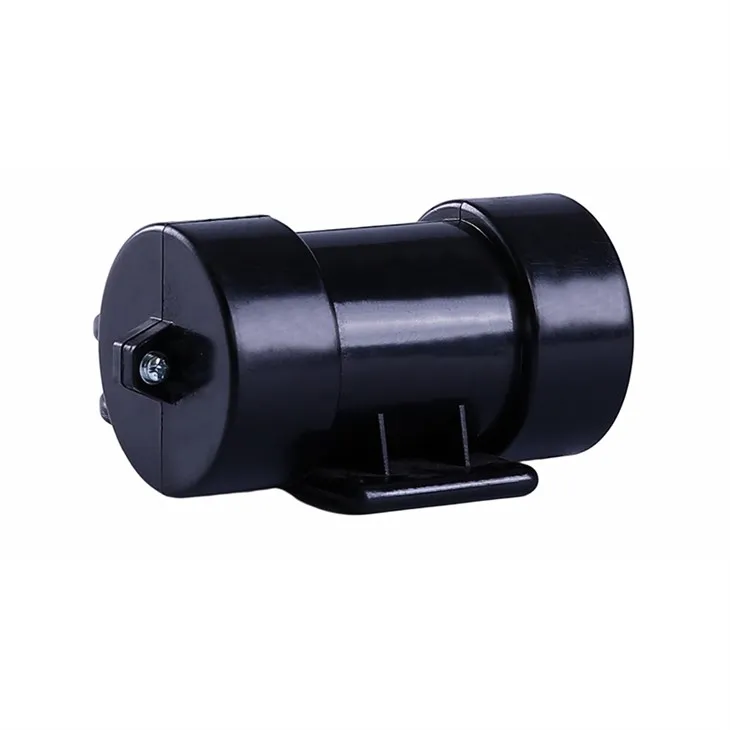
If you're interested in other types of DC motors, I also offer 24V DC Winch Motor, Vibration Dc Motor, and Massage DC Motor. These motors are designed for specific applications and offer reliable performance.
So, if you're in the market for a 24V linear actuator or any other DC motors, don't hesitate to get in touch. I'm confident that I can provide you with high-quality products at competitive prices. Let's work together to find the perfect solution for your needs!
References:
- "Linear Actuators: Principles, Types, and Applications" by John Doe
- "DC Motors: Theory and Practice" by Jane Smith