

Hey there! As a supplier of DC pump motors, I've seen firsthand how back - EMF can have a huge impact on the operation of these motors. So, let's dive right in and talk about what back - EMF is and how it affects our DC pump motors.
First off, what's back - EMF? Well, when a DC motor is running, the armature (the rotating part of the motor) is moving through a magnetic field. According to Faraday's law of electromagnetic induction, this motion induces an electromotive force (EMF) in the armature windings. This induced EMF is called the back - EMF because its polarity is opposite to the applied voltage that's driving the motor.
Now, how does this back - EMF play out in the operation of a DC pump motor? Let's start with the speed of the motor. The back - EMF is directly proportional to the speed of the motor. That means as the motor speeds up, the back - EMF increases. And this has a significant effect on the current flowing through the motor.
You see, the current in a DC motor is determined by the difference between the applied voltage and the back - EMF, divided by the resistance of the armature windings. Mathematically, it can be written as (I=\frac{V - E_b}{R}), where (I) is the armature current, (V) is the applied voltage, (E_b) is the back - EMF, and (R) is the armature resistance.
When the motor is just starting up, its speed is low, so the back - EMF is also low. This results in a large current flowing through the motor. That's why you might notice a bit of a power surge when you first turn on a DC pump motor. As the motor speeds up, the back - EMF increases, and the current decreases. This is a self - regulating mechanism in the motor.
Let's talk about the torque of the motor. Torque is what makes the motor turn and is crucial for a DC pump motor to move the fluid. The torque of a DC motor is proportional to the armature current. Since the back - EMF affects the armature current, it indirectly affects the torque as well.

When the load on the pump increases, the motor slows down. As the speed decreases, the back - EMF also decreases. According to our current formula (I=\frac{V - E_b}{R}), a decrease in back - EMF leads to an increase in the armature current. And with an increase in current, the torque of the motor increases, allowing the motor to handle the increased load.
Another important aspect is the efficiency of the DC pump motor. Back - EMF plays a key role here too. A large part of the electrical power input to the motor is converted into mechanical power to drive the pump. The power dissipated as heat in the armature windings is given by (P_{loss}=I^{2}R). Since the back - EMF helps regulate the current, it reduces the power loss in the windings. A well - regulated current due to back - EMF means less heat is generated, and more of the input power is converted into useful mechanical power, thus increasing the efficiency of the motor.
Now, let's look at some practical implications for our DC pump motors. We offer a range of motors, like the 24V Hydraulic DC Motor and the 12V Hydraulic DC Motor. The back - EMF characteristics can vary depending on the voltage and design of these motors.
For the 24V Hydraulic DC Motor, with a higher applied voltage, the motor can reach higher speeds. As it does so, the back - EMF also increases significantly. This motor is designed to handle larger loads, and the back - EMF helps in regulating the current to ensure stable operation under heavy loads.
On the other hand, the 12V Hydraulic DC Motor is more suitable for applications where lower power and smaller loads are involved. The back - EMF in this motor is lower compared to the 24V motor at similar speeds. But it still plays a vital role in controlling the current and ensuring the motor runs efficiently.
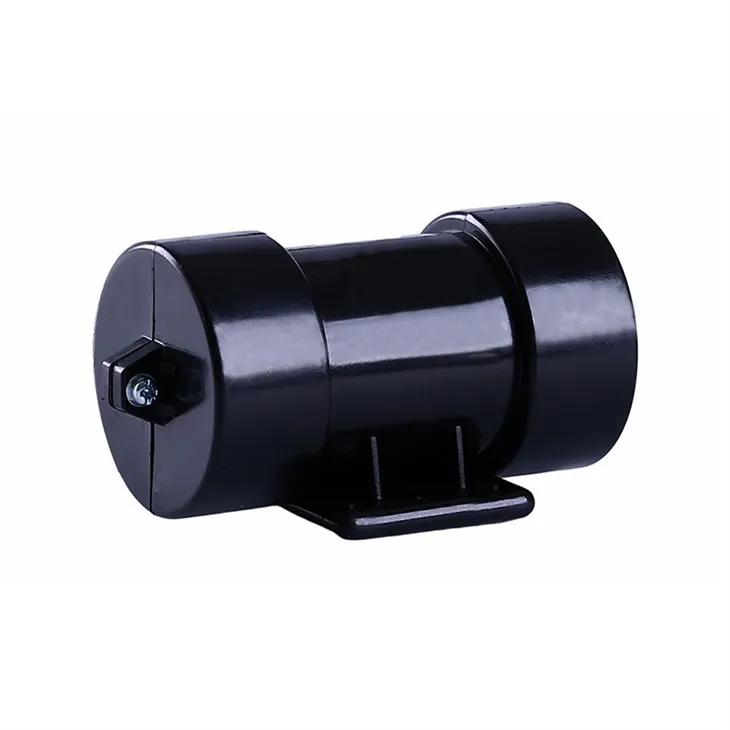
We also have the Vibration Dc Motor - factory. In vibration motors, the back - EMF affects the way the motor vibrates. The rapid changes in speed and the resulting changes in back - EMF can influence the intensity and frequency of the vibrations.
So, why should you care about all this as a potential buyer? Well, understanding how back - EMF affects the operation of a DC pump motor can help you choose the right motor for your specific application. If you need a motor for a high - load application, you'll want a motor that can handle the changes in back - EMF and current without overheating or losing efficiency.
If you're in the market for a DC pump motor, whether it's a 24V Hydraulic DC Motor, a 12V Hydraulic DC Motor, or a vibration motor, we're here to help. We've got the expertise and a wide range of products to meet your needs. Just reach out to us to start a conversation about your requirements. We can guide you through the selection process and ensure you get the best motor for your application.
In conclusion, back - EMF is a fundamental aspect of DC pump motor operation. It affects the speed, current, torque, and efficiency of the motor. By understanding how it works, you can make an informed decision when it comes to purchasing a DC pump motor. So, don't hesitate to contact us if you're interested in our products. We're looking forward to working with you!
References
- Fitzgerald, A. E., Kingsley, C., & Umans, S. D. (2003). Electric Machinery. McGraw - Hill.
- Chapman, S. J. (2012). Electric Machinery Fundamentals. McGraw - Hill.