

Hey there! I'm a supplier of DC brushed motors, and today I wanna talk about how the ripple current affects the performance of these motors.
First off, let's quickly understand what ripple current is. Ripple current is the AC component that rides on top of the DC current. In a DC power supply, it's hard to get a perfectly pure DC current. There are always some small fluctuations, and that's the ripple current.
Now, when it comes to DC brushed motors, ripple current can have a bunch of impacts. One of the most obvious effects is on the motor's torque. Torque is what makes the motor turn and do work. When there's a ripple current, it causes the magnetic field inside the motor to fluctuate. This means the torque produced by the motor also fluctuates. Imagine you're trying to drive a car, and the power from the engine keeps going up and down. It would be a bumpy and inefficient ride, right? Well, the same goes for a DC brushed motor. The fluctuating torque can lead to uneven rotation, which is not ideal for applications where smooth operation is crucial.
Another area where ripple current takes its toll is on the motor's speed. A DC brushed motor is designed to run at a relatively constant speed based on the input voltage. But the presence of ripple current can mess with this. The fluctuations in current can cause the motor to speed up and slow down slightly. This speed variation can be a real problem in applications like precision machinery or robotics, where a consistent speed is essential.
Let's talk about heat generation. Ripple current can cause the motor to heat up more than it should. The additional current fluctuations lead to extra power dissipation in the motor's windings and other components. This increased heat can reduce the motor's efficiency because more energy is being wasted as heat instead of being used to do useful work. Over time, excessive heat can also damage the motor's insulation and other internal parts, shortening its lifespan.

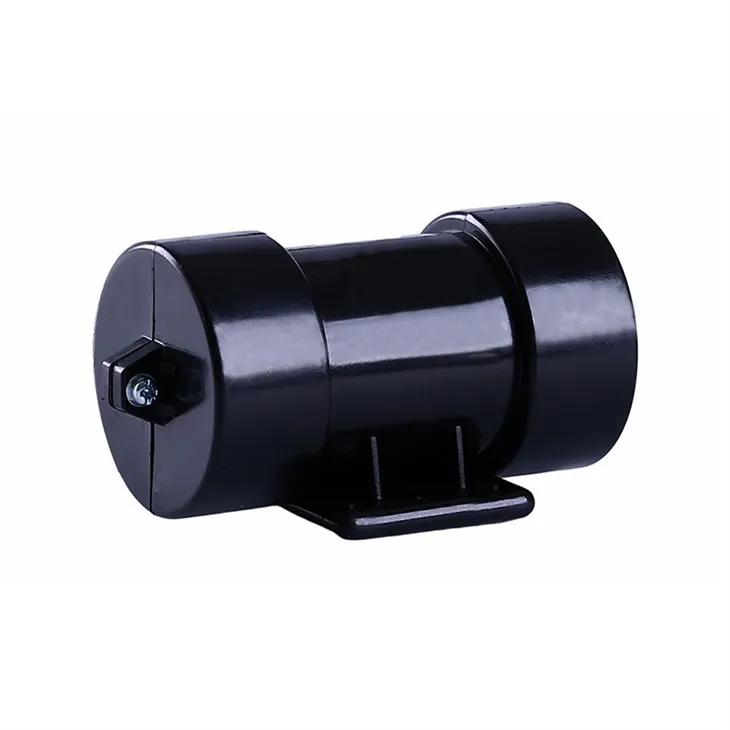
Now, how does this affect different types of DC brushed motors? For example, let's take a look at the Vibration Dc Motor-factory. These motors are often used in applications like mobile phones for vibration alerts or in gaming controllers. In these cases, a little bit of ripple current might not seem like a big deal at first glance. But if the ripple is too high, it can cause the vibration to be inconsistent or even produce unwanted noise. This can really affect the user experience.
Then there are the 24V Hydraulic DC Motor-factory motors. These are used in hydraulic systems where precise control is needed. Ripple current can disrupt the smooth operation of the hydraulic pump, leading to inaccurate fluid flow and pressure control. This can have serious consequences in applications like heavy machinery or industrial automation.
The 12V DC Water Pump Motor is another example. In a water pump, the motor needs to provide a steady flow of water. Ripple current can cause the pump to produce an uneven flow, which might not be sufficient for some applications. It could also lead to cavitation in the pump, which can damage the impeller and other components.
So, what can be done to mitigate the effects of ripple current? One option is to use better power supplies. A high - quality power supply with low ripple can significantly reduce the amount of ripple current reaching the motor. Another approach is to add filtering components, such as capacitors, to the motor circuit. These capacitors can smooth out the current and reduce the ripple.
As a DC brushed motor supplier, I've seen firsthand the importance of dealing with ripple current. It's not just about selling a motor; it's about providing a solution that works well in the customer's application. Whether you're looking for a Vibration Dc Motor-factory, a 24V Hydraulic DC Motor-factory, or a 12V DC Water Pump Motor, we have the expertise to help you choose the right motor and deal with any ripple current issues.
If you're in the market for DC brushed motors and want to learn more about how to optimize their performance, or if you have any questions about ripple current and its effects, don't hesitate to reach out. We're here to have a chat and find the best solutions for your specific needs.
References:
- "Electric Motors and Drives: Fundamentals, Types and Applications" by Austin Hughes
- "Power Electronics: Converters, Applications, and Design" by Ned Mohan