

Hey there! As a supplier of DC pump motors, I often get asked about how to read the performance curve of a DC pump motor. It might seem a bit intimidating at first, but once you get the hang of it, it's not that hard. In this blog, I'll break it down for you and make it super easy to understand.
First off, let's talk about what a performance curve is. A performance curve is basically a graph that shows how a DC pump motor behaves under different conditions. It gives you a visual representation of how the motor's performance changes as you vary things like voltage, current, speed, and torque. By looking at the performance curve, you can figure out if a particular motor is suitable for your application.
Understanding the Axes
Most performance curves have two axes: the x - axis and the y - axis. The x - axis usually represents the independent variable, which is often the speed of the motor (in revolutions per minute or RPM). The y - axis represents the dependent variables, which can include things like torque, power, and efficiency.
Let's start with torque. Torque is the rotational force that the motor can produce. On the performance curve, the torque curve shows how the torque output of the motor changes as the speed changes. Generally, as the speed of the motor increases, the torque decreases. This is because the motor has to work harder to spin faster, and there are limitations to how much torque it can generate at high speeds.
Power is another important variable. Power is the rate at which the motor does work, and it's calculated by multiplying the torque by the speed. The power curve on the performance curve shows how the power output of the motor changes with speed. There's usually an optimal speed at which the motor produces the maximum power. This is an important point to consider when selecting a motor for your application.
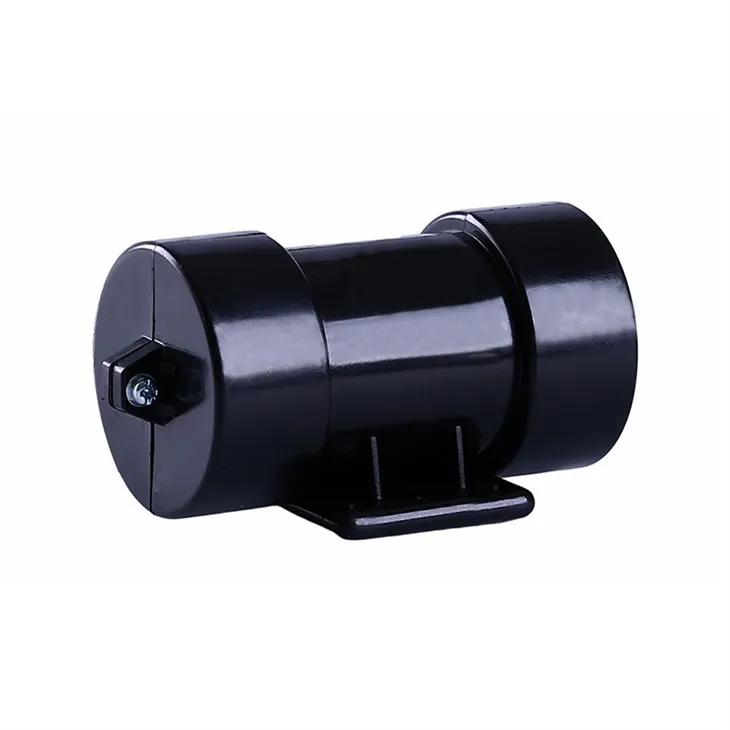

Efficiency is also crucial. Efficiency is the ratio of the output power to the input power. It tells you how well the motor converts electrical energy into mechanical energy. The efficiency curve on the performance curve shows how the efficiency of the motor changes with speed. You want to operate the motor at a speed where it has high efficiency to save energy and reduce operating costs.
Analyzing the Curves
Now, let's take a closer look at how to analyze these curves. When you're looking at a performance curve, the first thing you need to do is identify the key points. The no - load speed is the speed at which the motor rotates when there is no load (no torque) applied. This is usually the maximum speed that the motor can achieve. You can find this point on the performance curve where the torque is zero.
The stall torque is the maximum torque that the motor can produce when it's stopped (the speed is zero). This is an important parameter because it tells you how much force the motor can generate to start moving a load. You can find the stall torque on the performance curve where the speed is zero.
Another important point is the maximum power point. This is the point on the performance curve where the motor produces the most power. To find this point, you can look for the peak of the power curve. Operating the motor at or near this point can give you the best performance in terms of power output.
Application Considerations
When you're using the performance curve to select a DC pump motor for your application, you need to consider the requirements of your application. For example, if you need a motor to drive a pump that requires a high torque at low speeds, you'll want to look for a motor with a high stall torque and a relatively flat torque curve at low speeds.
If you're looking for a motor for a high - speed application, you'll want to focus on the motor's no - load speed and its ability to maintain a reasonable torque at high speeds. You also need to consider the power requirements of your application. Make sure that the motor can provide enough power to operate your pump efficiently.
Let's say you're in the market for a specific type of DC motor. We offer a range of great options, like the 24V Hydraulic DC Motor - factory, the Vibration Dc Motor - factory, and the 12V Hydraulic DC Motor - factory. Each of these motors has its own performance curve, and you can use the principles I've discussed here to analyze them and choose the one that's right for you.
Impact of Voltage and Current
Voltage and current also have a big impact on the performance of a DC pump motor. The performance curves are usually plotted for a specific voltage. If you change the voltage, the performance of the motor will change. Generally, increasing the voltage will increase the speed, torque, and power of the motor. However, you need to be careful not to exceed the maximum voltage rating of the motor, or you could damage it.
Current is related to the power and torque of the motor. As the load on the motor increases, the current drawn by the motor also increases. You need to make sure that your power supply can provide enough current to the motor to meet its requirements. The performance curve can give you an idea of how the current changes with load, so you can size your power supply accordingly.
Reading Multiple Curves
Sometimes, you might come across performance curves that show multiple curves on the same graph. For example, there might be curves for different voltages or different load conditions. When you're reading these types of curves, it's important to pay attention to the legend. The legend will tell you which curve corresponds to which condition.
Comparing different curves can help you understand how the motor's performance changes under different conditions. For example, if you're comparing the performance curves of a motor at different voltages, you can see how increasing the voltage affects the speed, torque, and power of the motor.
Conclusion
Reading the performance curve of a DC pump motor is an essential skill if you're in the market for a motor or if you're using one in your application. By understanding the axes, analyzing the curves, and considering the application requirements, you can select the right motor for your needs.
If you're interested in learning more about our DC pump motors or if you have any questions about the performance curves, don't hesitate to reach out. We're here to help you make the best choice for your application. Whether you're looking for a 24V Hydraulic DC Motor - factory, a Vibration Dc Motor - factory, or a 12V Hydraulic DC Motor - factory, we've got you covered. Contact us today to start the procurement process and get the best motor for your project.
References
- "Electric Motors and Drives: Fundamentals, Types and Applications" by Austin Hughes
- "DC Motors: Principles, Design, and Application" by various authors in industry research papers.