

Selecting the right 24V linear actuator for your application is crucial, especially when considering speed and force requirements. As a 24V linear actuator supplier, I've witnessed firsthand the importance of making an informed decision. In this blog post, I'll guide you through the process of choosing a 24V linear actuator based on these two critical factors.
Understanding Speed Requirements
The speed of a linear actuator is typically measured in inches per second (in/s) or millimeters per second (mm/s). It refers to how quickly the actuator can extend or retract its rod. When determining the speed requirements for your application, you need to consider the following aspects:
Application Cycle Time
The cycle time is the total time it takes for the actuator to complete one full extension and retraction cycle. For applications that require rapid movements, such as in automated machinery or high - speed sorting systems, a faster actuator is necessary. For example, if your application has a tight cycle time of 1 second and the actuator needs to move a distance of 2 inches, you'll need an actuator with a speed of at least 2 in/s.
Load Movement
The nature of the load being moved also affects the speed requirements. If you're moving a light load, you can generally opt for a faster actuator. However, if the load is heavy, the actuator may need to slow down to generate enough force to move it. For instance, in a robotic arm application where the arm needs to pick and place small objects quickly, a high - speed actuator can be used. But if the arm is handling large and heavy components, a slower but more powerful actuator might be required.
Understanding Force Requirements
The force of a linear actuator is measured in pounds (lbs) or newtons (N). It represents the amount of push or pull the actuator can exert. To determine the force requirements for your application, you should consider the following:
Load Weight
The weight of the load is the most obvious factor. The actuator needs to be able to lift or move the load against gravity or other opposing forces. For example, if you're using a linear actuator to lift a platform with a load of 100 lbs, the actuator must be able to generate at least 100 lbs of force.
Friction and Resistance
In addition to the load weight, you also need to account for friction and resistance in the system. This includes friction between the actuator rod and its housing, as well as any resistance from other mechanical components in the application. For example, in a sliding door application, the actuator needs to overcome the friction between the door and its tracks. You may need to test the system or consult with an engineer to estimate the amount of friction and resistance.
Safety Factor
It's always a good idea to include a safety factor when calculating the force requirements. A safety factor of 1.2 to 1.5 is commonly used. This means that if your calculated force requirement is 100 lbs, you should choose an actuator that can generate 120 - 150 lbs of force. This provides a buffer in case of unexpected loads or changes in the operating conditions.
Balancing Speed and Force
In many cases, there is a trade - off between speed and force in a linear actuator. Generally, as the force output of an actuator increases, its speed decreases. This is because the motor has to work harder to generate more force, which limits its ability to move the rod quickly.
To balance speed and force, you need to carefully evaluate your application requirements. If your application requires both high speed and high force, you may need to consider using a more powerful motor or a different type of actuator design. For example, some actuators use a gearbox to increase the force output while sacrificing some speed.
Selecting the Right 24V Linear Actuator
Once you have determined your speed and force requirements, you can start selecting the right 24V linear actuator. Here are some steps to follow:

Check the Actuator Specifications
Most linear actuator manufacturers provide detailed specifications for their products, including speed and force ratings. Look for an actuator that meets or exceeds your speed and force requirements. Make sure to also check other specifications such as stroke length, duty cycle, and mounting options.
Consider the Motor Type
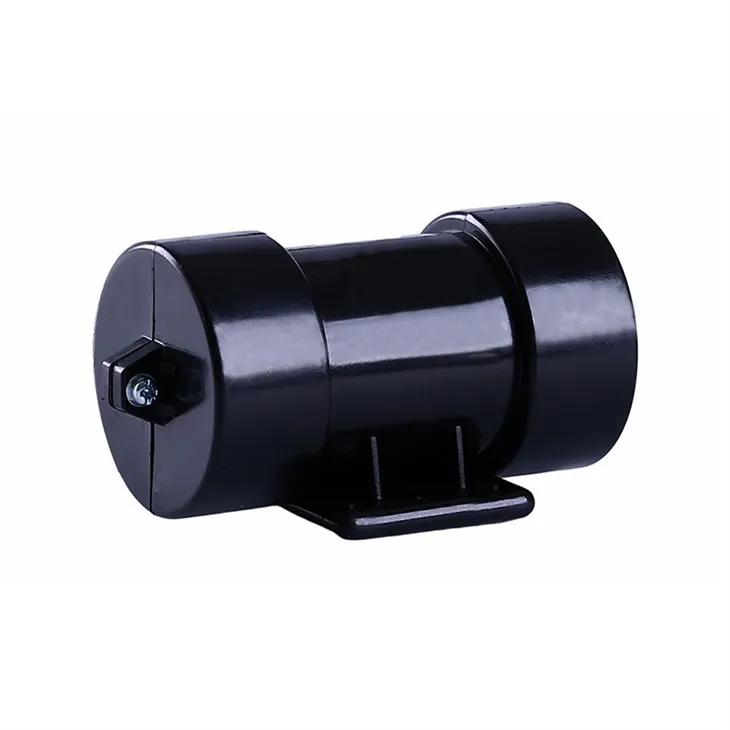
The motor is the heart of the linear actuator. Different motor types have different performance characteristics. For 24V linear actuators, permanent magnet DC (PMDC) motors are commonly used. You can find more information about PMDC motors at PMDC Motor - factory. Vibration DC motors can also be used in some applications, and you can learn about them at Vibration Dc Motor - factory. Additionally, 12V hydraulic DC motors may be an option for applications that require high force, and you can explore them at 12V Hydraulic DC Motor.
Evaluate the Quality and Reliability
Choose an actuator from a reputable manufacturer. A high - quality actuator will be more reliable and have a longer lifespan. Look for actuators that are made from high - quality materials and have been tested thoroughly.
Consult with an Expert
If you're still unsure which actuator to choose, don't hesitate to consult with an expert. As a 24V linear actuator supplier, I'm always available to provide advice and guidance based on your specific application requirements.
Conclusion
Selecting a 24V linear actuator based on speed and force requirements is a complex but essential process. By understanding your application needs, carefully evaluating the actuator specifications, and considering factors such as motor type, quality, and reliability, you can choose the right actuator for your project.
If you're in the market for a 24V linear actuator and need further assistance, feel free to reach out. Our team of experts is ready to help you find the perfect solution for your application. We can provide detailed product information, technical support, and even custom - made solutions if needed. Start the procurement discussion today and let us help you optimize your project with the right 24V linear actuator.
References
- "Motion Control Handbook" by Peter Nachtwey
- "Linear Actuator Design and Application Guide" by various industry experts