

Hey there! If you're into winches or work in industries that use them, you've probably wondered about the normal RPM range for a winch motor. Well, you're in the right place! As a winch motor RPM supplier, I've got the lowdown on all things related to winch motor RPMs.
First off, let's talk about what RPM means. RPM stands for revolutions per minute, which is a measure of how fast the motor's shaft rotates in one minute. The RPM of a winch motor is a crucial factor as it directly affects the winch's performance, including how quickly it can pull in or let out the cable.
The normal RPM range for a winch motor can vary widely depending on several factors. One of the main factors is the type of winch. There are different types of winches, such as electric winches, hydraulic winches, and pneumatic winches. Each type has its own typical RPM range.
Electric winches are probably the most common type you'll come across. They're used in a variety of applications, from off - road vehicles to industrial settings. For small - to medium - sized electric winches used on ATVs or light - duty trucks, the RPM range can be anywhere from 1000 to 3000 RPM. These lower RPMs are suitable for slower, more controlled pulling. The advantage of this range is that it provides more torque, which is essential for lifting heavy loads. For example, if you're using a winch to pull a stuck vehicle out of mud, you need that extra torque to get the job done.
On the other hand, larger industrial electric winches may have an RPM range of 3000 to 5000 RPM. These higher RPMs allow for faster cable movement, which can be useful when time is of the essence. In an industrial setting where you need to quickly move heavy materials from one place to another, a winch with a higher RPM can significantly increase productivity.
Hydraulic winches are often used in heavy - duty applications, like construction and marine industries. The RPM range for hydraulic winches is usually a bit different. They typically operate at lower RPMs compared to electric winches, often in the range of 500 to 2000 RPM. The reason for this is that hydraulic systems are designed to provide high torque at lower speeds. This is ideal for applications where you need to lift extremely heavy loads, such as large construction equipment or boats.
Pneumatic winches are less common but are used in some specialized applications. They usually have an RPM range similar to smaller electric winches, around 1000 to 3000 RPM. Pneumatic winches are often chosen for their simplicity and safety in certain environments, like those where there's a risk of explosion or fire.
Another factor that affects the normal RPM range is the size and capacity of the winch. A winch with a higher weight capacity will generally have a lower RPM because it needs to generate more torque to lift the heavy load. For instance, a winch rated for 10,000 pounds will likely have a lower RPM than a winch rated for 2000 pounds.
The gear ratio of the winch also plays a big role. A winch with a high gear ratio will have a lower RPM but more torque, while a winch with a low gear ratio will have a higher RPM but less torque. So, when you're choosing a winch motor, you need to consider the gear ratio based on your specific application.
Now, as a winch motor RPM supplier, I know that finding the right winch motor with the appropriate RPM range is crucial for your project. That's why we offer a wide range of winch motors to suit different needs. Whether you need a high - RPM motor for fast - paced applications or a low - RPM motor for heavy - duty lifting, we've got you covered.
In addition to winch motors, we also supply other types of DC motors. Check out our DC Gear Motor - factory, where you can find high - quality DC gear motors. These motors are known for their reliability and efficiency, and they can be used in a variety of applications.
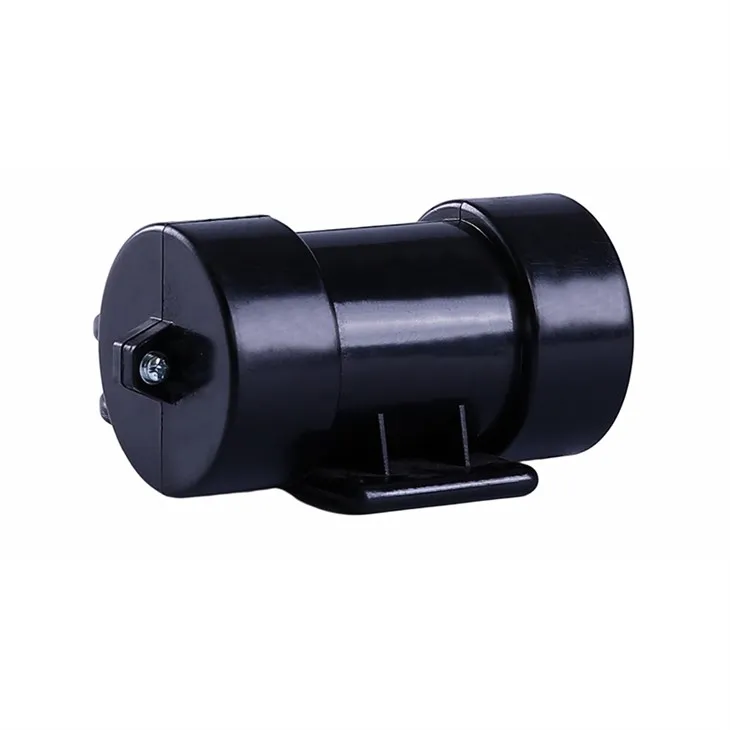
If you're looking for a more specialized motor, our Push Rod DC Motor might be the perfect fit. It's designed for applications where precise linear motion is required. And for applications that need vibration, our Vibration Dc Motor is a great option.
If you're in the market for a winch motor or any of our other products, don't hesitate to reach out. We're here to help you find the right solution for your needs. Whether you're a professional in the industry or a DIY enthusiast, we can provide you with the information and support you need to make the right choice.
When it comes to choosing the right RPM for your winch motor, it's important to do your research. Consider the application, the load you'll be lifting, and the environment in which the winch will operate. By doing so, you can ensure that you get a winch motor that performs optimally and meets your requirements.
In conclusion, the normal RPM range for a winch motor varies depending on the type of winch, its size and capacity, and the gear ratio. As a winch motor RPM supplier, we're committed to providing you with the best products and the knowledge to make an informed decision. So, if you have any questions or are ready to start your purchase, feel free to contact us. We look forward to working with you to find the perfect winch motor for your project.
References

- General knowledge of winch motor technology from industry experience
- Technical manuals of various winch motor manufacturers